
The Weight Room Has a Vanity Problem
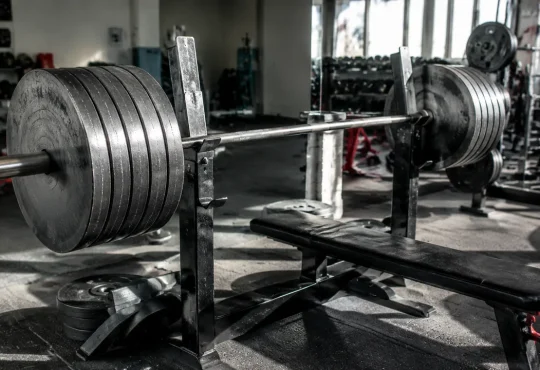
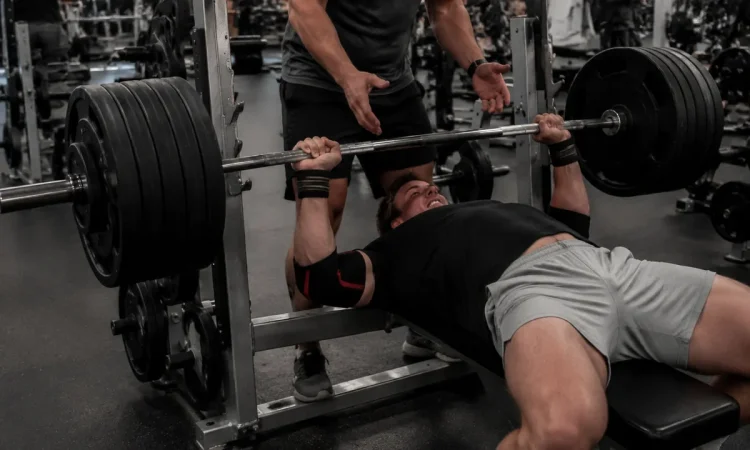
Walk into any commercial gym on a Monday evening and you’ll see it within minutes. Someone loading a barbell far beyond what their technique can support, grinding through a set of squats that looks less like an athletic movement and more like a controlled collapse. Their spotter winces. The person next to them quietly adds another plate to mirror the weight. Nobody says anything. This is ego lifting and the damage it does extends well beyond a torn rotator cuff or a blown-out lower back.
The term gets thrown around mostly in the context of injury prevention, which makes sense. The orthopedic consequences are real and well-documented. But reducing ego lifting to a physical risk problem is like saying reckless driving is dangerous because it scratches the paint. The surface observation is true. The real cost runs much deeper.
What Ego Lifting Actually Is (And Isn’t)
It’s worth being precise here, because “ego lifting” gets misused as a catch-all criticism for anyone lifting heavy. That’s not what this is about. Plenty of experienced lifters move serious weight with controlled, deliberate technique built over years of progressive training. Watching someone squat 400 pounds with genuine competence is a different thing entirely from watching someone squat 315 with a rounded spine and a prayer.
Ego lifting is the deliberate selection of a load beyond what you can move with honest, controlled form not because you’re testing a one-rep max under careful conditions, but because the number on the bar matters more to you than what’s happening in your body. It’s choosing the weight for the audience, real or imagined, rather than for the adaptation. The mirror, the gym regulars, the guy who just finished his set on the adjacent platform these become the arbiters of what goes on the bar. Your nervous system and connective tissue are not consulted.
That distinction is important. It means ego lifting is fundamentally a social and psychological behavior, not just a training error.
The Invisible Tax on Progress
Here’s the part most people miss when they’re in the middle of it: ego lifting is spectacularly inefficient.
Muscle hypertrophy and strength development depend on mechanical tension, metabolic stress, and progressive overload applied to the target tissue. When you load more than you can control, the movement pattern degrades and the load gets redistributed away from the intended muscles and onto joints, connective tissue, and stabilizers that are not equipped to handle it long-term. You’re not training harder. You’re training incorrectly, and the muscles you’re trying to develop are getting cheated out of the stimulus that would actually make them grow.
A lifter who consistently works with weights that allow genuine eccentric control, full range of motion, and honest muscular fatigue will outpace someone ego lifting at heavier loads within months. Not despite using less weight because of it. The research on proximity to failure, time under tension, and motor unit recruitment all point in the same direction. Control is not the enemy of intensity. Ego is.
The invisible tax compounds over time. Minor form breakdowns become ingrained movement patterns. Joints that absorb load they were never designed to absorb begin to protest not with dramatic acute injuries at first, but with the slow accumulation of inflammation, reduced mobility, and that dull ache that becomes background noise. By the time the acute injury arrives, the damage was already months or years in the making.
What It Does to the Mind
This is the dimension that almost never gets discussed, and it might be the most consequential.
Ego lifting trains you to be dishonest with yourself. Every session becomes a performance of capability rather than an earnest attempt to develop it. You stop tracking real progress because the metric you’ve chosen the number on the bar is no longer connected to meaningful growth. You start to avoid exercises where you look weak. Unilateral work gets dropped. Mobility drills feel like a waste of time. The things that would actually address your weak points get quietly shelved because they’d require you to use lighter loads in front of other people.
Over time, training stops being a feedback loop and becomes a costume. The gym is where you go to display a version of yourself, not to actually build one.
There’s also the identity fragility this creates. When your sense of competence is tied to a specific number on a specific lift, any disruption to that number a deload week, an injury, changing gyms, training with stronger people becomes a threat to your self-image. Lifters who’ve built their identity around being “the strong guy” in the room are notoriously bad at accepting coaching, modifying programs, or acknowledging limitations. The ego that drove them to overload the bar also prevents them from making the adjustments that would allow genuine long-term development.
The Social Contagion Nobody Talks About
Ego lifting doesn’t happen in isolation. It spreads.
Gyms develop cultures around it. When the lifters who get the most social attention are the ones moving the most weight regardless of technique the implicit message is clear. Newer trainees calibrate what “good” looks like based on what earns respect in the room. They start loading plates before their movement patterns are ready. They skip the fundamentals because nobody around them seems to value the fundamentals. The veterans who could course-correct them either don’t notice or don’t say anything because they’ve been doing the same thing for years.
Social media has amplified this dynamic to a grotesque degree. The algorithm does not reward the person doing controlled, thoughtful sets at moderate intensity. It rewards spectacle the heavy miss that gets called a “grind,” the max attempt that bends the bar. Views and engagement follow drama and extremity. What gets modeled to millions of beginner lifters is not good training. It’s theater.
The result is an entire generation of recreational trainees who’ve absorbed deeply incorrect intuitions about what productive training looks like. More weight, more reps, more noise, more sweat. The idea that restraint and precision might be the actual path to results feels counterintuitive because the content they’ve consumed has never shown them that version of the sport.
The Harder Conversation
There’s something uncomfortable at the center of all this that doesn’t get said plainly: ego lifting is often a symptom of a wound that the gym was supposed to heal.
A lot of people come to strength training carrying real pain. They feel physically inadequate, overlooked, powerless in other domains of their life. The weight room offers a clear, visible metric of worth you either lift it or you don’t. For someone starving for a concrete sense of capability, that’s intoxicating. The problem is that using training as a daily proof-of-worth ritual doesn’t heal the underlying wound. It keeps it fresh. Every session becomes a test you’re terrified of failing, which means every session requires you to pass which means the weight has to go up, the form has to hold together by whatever means necessary, and anyone who questions your load selection is a threat rather than a resource.
Real progress in the weight room, like real progress in most things, requires the willingness to be genuinely bad at something for a while. To use the lighter weight. To accept that your squat pattern needs work before your squat numbers go up. To train for the adaptation instead of the audience.
That requires a security that ego lifting, by definition, is evidence you haven’t found yet.
The joints will heal, eventually. The movement patterns can be relearned with enough patience. But the relationship with yourself that ego lifting reflects and reinforces that takes longer to address, and no amount of weight on the bar will get you there faster.