

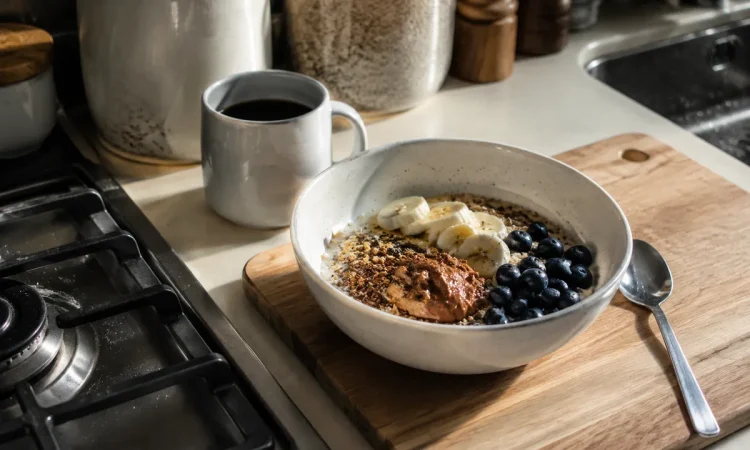
Three minutes. That’s roughly the time it takes to scroll through your morning notifications, pour a cup of coffee, and wonder why you feel vaguely exhausted before the day has even started. It’s also, as it turns out, enough time to eat something that actually does something for you.
The problem isn’t really about time. Most people who skip breakfast or grab something forgettable aren’t doing so because they genuinely can’t find three minutes. They’re doing it because nobody ever made the three-minute version feel worth it like a real breakfast, not just a consolation prize.
So let’s fix that.
What Your Body Actually Needs in the Morning
The goal isn’t to recreate a Sunday brunch situation. It’s to give your body and brain enough fuel to function specifically to avoid the mid-morning crash that sends people diving into a bag of chips at 10:47 a.m.
What you’re after is a combination of protein, a bit of healthy fat, and something with fiber. Protein stabilizes blood sugar and keeps hunger at bay longer than any carb-only option will. Fat slows digestion and helps fat-soluble vitamins actually absorb. Fiber feeds the gut microbiome, which in turn influences mood, immunity, and energy in ways that researchers are only beginning to fully map.
You do not need to hit every micronutrient. You are not building a complete supplement profile. You’re just trying to give your morning a fighting chance.
The Three-Minute Constraint Is Real So Work With It
Here’s where most nutrition advice falls apart: it assumes you have setup time, cleanup time, and a kitchen that feels welcoming before8 a.m. For a lot of people, none of those things are true. The kitchen is a battlefield of previous nights. The clock is already moving. The kids need something. The commute doesn’t care.
Working within three minutes means treating prep as a design problem, not a willpower problem. The solutions that actually stick are the ones that require almost no decisions in the moment because early morning is not peak cognitive performance time for most humans, and forcing yourself to choose between four options while half-asleep is a recipe for choosing none of them.
This is why the prep-ahead mindset matters more than any specific recipe. Not batch cooking in the elaborate Sunday meal-prep sense just setting up one or two things the night before so that morning-you has nothing to figure out.
What Actually Works in Three Minutes
Greek yogurt with something on top is the most underrated fast breakfast in existence. Full-fat, unsweetened Greek yogurt has around 17 grams of protein per cup, more than many protein shakes. Throw in a handful of frozen berries you let sit on the counter for two minutes, a spoon of almond butter, or a tablespoon of chia seeds you keep on the counter, and you have something genuinely nourishing. Total time: about ninety seconds if the container is already in the fridge.
Hard-boiled eggs made the night before or bought pre-boiled, which is a thing and costs about the same as making them paired with a piece of fruit covers protein, fat, and vitamins with almost zero morning effort. Peel them the night before. Put them on the shelf at eye level. That’s it.
Nut butter on a slice of whole grain bread with a banana requires no refrigeration issues, no cooking, and honestly tastes fine. The banana adds potassium, thenut butter adds fat and protein, the bread adds fiber if it’s the right kind. You can eat this while walking to the car. That’s not ideal from an etiquette standpoint, but it’s a far better option than nothing.
Overnight oats deserve a mention not because they’re trendy but because they genuinely take about four minutes to make the night before and then require literally zero time in the morning you open the jar and eat. Half a cup of rolled oats, milk or a milk alternative, a spoon of chia seeds, some fruit, maybe a drizzle of honey. That’s your fiber, your protein (especially if you use high-protein milk), your slow-burning carbohydrates. The texture becomes creamy overnight. Some people eat them cold, some people prefer a thirty-second microwave. Either way, the morning version of you has already won.
The Lie About Needing a Full Breakfast
There’s an old piece of conventional wisdom that says breakfast should be your biggest meal. That framing has done a lot of people a quiet disservice, because it sets the bar so high that anything less feels like failure and failure leads to skipping entirely.
The research on breakfast is actually more nuanced than the “most important meal of the day” marketing copy suggests. What matters isn’t that you eat a large breakfast; it’s that you eat something that keeps your blood sugar stable and prevents the kind of compensatory overeating that happens later when you’ve been running on empty since dinner the previous night.
A small, protein-forward breakfast that you actually eat is measurably better than a perfect breakfast that you never make. This sounds obvious, but it’s worth saying plainly because perfectionism is one of the quieter reasons people abandon good habits.
Making It Stick Without Thinking About It
The three-minute breakfast only stays a three-minute breakfast if you set up the conditions for it. This means keeping the right things stocked Greek yogurt, eggs, nut butter, rolled oats, fruit that doesn’t require peeling or cutting. It means putting those things at the front of the fridge and the front of the pantry, not behind the leftover birthday cake or whatever is currently occupying prime real estate on your shelf.
It also means having a default. One go-to option that you fall back on when you haven’t thought about it, when you’re tired, when the week has been harder than expected. The brain loves a default. Decision fatigue is real, and mornings are already asking a lot of your prefrontal cortex. Reduce the choices and you increase the follow-through.
Some people benefit from literally putting the ingredients together the night before the yogurt jar already portioned, the egg already peeled in a small container, the fruit already washed and sitting in a bowl on the counter. These are tiny acts of preparation that take maybe three minutes at night and save you from the morning scramble.
A Word on Coffee as a Meal Replacement
Let’s be direct about this one. Coffee does a lot of things. It sharpens focus, stimulates the nervous system, and creates a genuinely pleasant ritual that millions of people organize their mornings around. What it does not do is provide protein, fiber, or anything your cells can actually use as fuel. Caffeine without food raises cortisol, which over time can contribute to that specific kind of wired-but-unfocused feeling that plagues a lot of people between 9 and 11 a.m.
Adding a splash of milk helps slightly. A whole coffee-and-breakfast combo where the breakfast is actual food helps substantially more.
This isn’t a case against coffee. It’s a case for not counting it as sustenance.
The Three-Minute Frame Is Also a Mental Shift
There’s something worth sitting with here, beyond the logistics. The reason three-minute breakfasts feel like a compromise is largely cultural we’ve inherited the idea that a proper meal requires effort, presentation, and time, and that eating something quick means you’ve failed at the morning.
But nutrition doesn’t grade on presentation. Your digestive system has no idea whether your yogurt was served in a ceramic bowl or eaten out of the container while standing over the sink. What it knows is whether it got what it needed to run the next few hours cleanly.
Removing the guilt around fast eating is itself a form of nutritional improvement, because guilt and stress around food habits tend to undermine them over time. Eating well in three minutes isn’t the compromise version of a healthy breakfast. Done right, it’s just breakfast quick, functional, and genuinely good enough to carry you through to lunch without the energy dip, the irritability, or the vending machine temptation at 11.
Three minutes is plenty. You just have to believe it is.