
The Industry That Sold Us a Feeling
Walk into any Sephora, scroll through Instagram for ten minutes, or open a wellness newsletter, and you’ll find the same promise packaged in a dozen different ways: buy this, and feel better. A $48 eucalyptus candle. A jade roller that promises to “move stagnant energy.” A silk sleep mask with your initials embossed on it. The self-care industry is now worth over $1.5 trillion globally, and it keeps growing not because people are getting better at taking care of themselves, but largely because the opposite is true.
There’s something quietly absurd about the fact that “self-care” a term originally used in medical and psychiatric contexts to describe a patient’s ability to maintain basic functioning has been repackaged as a luxury lifestyle category. The phrase didn’t start at a spa. It started in hospitals, in social work offices, in burnout-prevention frameworks designed for caregivers and high-stress professionals. Somewhere between the 1970s and the Instagram era, a clinical concept became a marketing goldmine.
That transformation should give us pause, because what got lost in translation isn’t trivial.
What We Mean When We Say “Self-Care”
Ask ten people what self-care looks like, and you’ll get roughly the same visual: a bathtub with candles, a face mask, maybe a glass of wine and a Netflix queue. It’s relaxation coded as care. And relaxation isn’t nothing rest matters, pleasure matters but mistaking momentary comfort for genuine care is like treating a fever with a cool cloth and calling it medicine. It addresses the sensation, not the source.
Real self-care is unglamorous by nature. It looks like going to a doctor’s appointment you’ve been postponing for six months. It looks like having a hard conversation with a friend instead of lettingresentment quietly calcify. It looks like sleeping eight hours even when your to-do list is still full, not because you lit a lavender candle first, but because you made an actual decision about your limits. It looks like financial planning, even when your bank account makes you want to look away. It looks like learning to say no not as a quirky boundary-setting ritual, but as a consistent practice that costs you something socially every time you do it.
None of that makes for good content. You can’t photograph a person choosing to leave a social event early because they’re depleted. You can’t sell the act of sitting with discomfort until it passes. The algorithm doesn’t reward the quiet, boring work of knowing yourself.
The Privilege Trap Buried Inside the Conversation
There’s another layer worth examining, and it’s uncomfortable. When self-care gets reduced to consumption, it becomes a class performance. The implication rarely stated outright but embedded in the aesthetic is that people who are doing self-care “right” are the ones who can afford the good products, the gym membership, the meditation app subscription, the therapist who charges $200 a session out of pocket.
This framing doesn’t just miss the point. It actively harms people who are already stretched thin. A single mother working two jobs doesn’t need to be told that she’s neglecting herself because she can’t afford a Peloton. A 24-year-old drowning in student debt doesn’t need another email suggesting that a skincare routine will fix the low-grade dread she feels every morning. What they need what most people need is structural acknowledgment that exhaustion is often a systemic problem, not a personal failure.
Audre Lorde, who helped give self-care its political teeth, wrote about it as “an act of political warfare” a way for marginalized people to preserve themselves within systems designed to grind them down. That is a fundamentally different idea than buying a $30 face mist because the packaging is pretty. Lorde wasn’t talking about spa days. She was talking about survival, about refusing to disappear.
When the wellness industry appropriates that framework and strips it of its politics, something important gets erased.
The Psychology of Purchased Comfort
Here’s what makes this complicated: retail therapy works, at least a little, at least temporarily. There’s real research behind the mood lift of buying something that signals care not because the product has magic properties, but because the act of choosing it sends yourself a message: you matter enough to spend on. That psychological mechanism is real.
But it’s also easily hijacked. The dopamine hit from a new purchase is brief. The problem that made you reach for it is usually still sitting exactly where you left it. And the cycle feel depleted, buy something restorative, feel briefly better, feel depleted again keeps your emotional energy focused outward, on products and aesthetics and what your self-care looks like to other people, rather than inward, on what you actually need.
There’s a word for when external solutions become substitutes for internal work: avoidance. And avoidance dressed up in rose quartz and silk bonnets is still avoidance.
What Genuine Self-Care Actually Requires
The honest answer is that it requires attention the sustained, patient kind that doesn’t scale or photograph well. It starts with getting curious about what actually restores you versus what you’ve been told should restore you. Those aren’t always the same thing.
Some people genuinely do find long baths restorative. Some find them claustrophobic and boring. Some people are recharged by an hour alone with a book; others feel better after a loud dinner with people they love. Self-care, when it’s real, is deeply personal which is precisely why a one-size-fits-all product category will always be an inadequate substitute for it.
It also requires honesty about what’s actually draining you. If you’re chronically exhausted because your job is consuming you, a sleep mask won’t fix that. If you’re lonely, more solo “me time” rituals might actually make things worse. If you’re anxious about the future, a gratitude journal has its limits. The product economy has every incentive to offer you a surface solution and keep you coming back; the harder work of diagnosing root causes has to be something you choose yourself.
And that’s the part no one is going to sell you, because it isn’t for sale.
A Different Way to Think About It
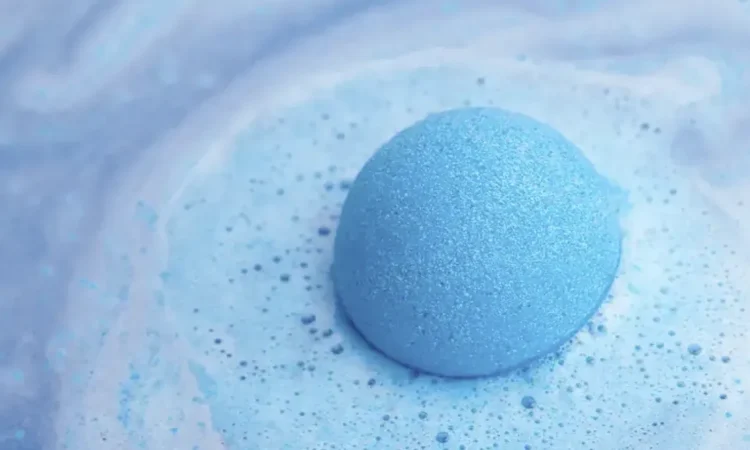
None of this is an argument against pleasure, or against nice things, or against taking a long bath when you need one. Enjoyment is part of a full life. The issue isn’t the bath bomb. The issue is believing the bath bomb is doing work it isn’t equipped to do.
The shift worth making is treating self-care less like a consumer category and more like a practice of attention attention to what depletes you, what restores you, what you keep avoiding, and what you genuinely need. That practice might occasionally look like a face mask. More often, it looks like an honest conversation, a boundary you hold even when it’s awkward, a difficult appointment you finally keep, a night where you put the phone down before midnight and actually sleep.
That version of self-care won’t trend. It doesn’t come in a gift set. But it’s the version that actually accumulates into something a life that doesn’t require constant recovery from itself.