
The Night That Used to Come Easily
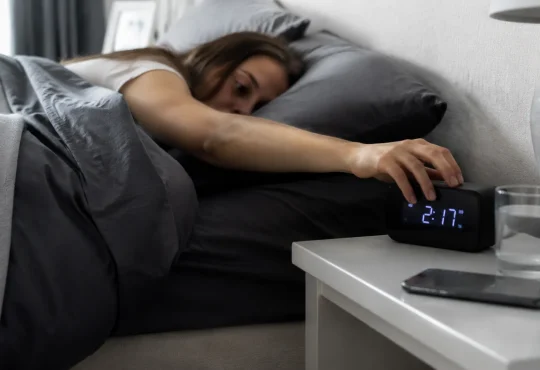
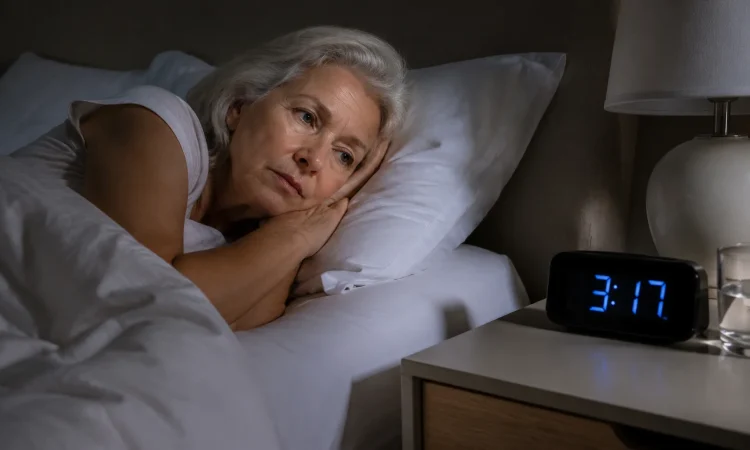
There’s a particular kind of frustration that comes with lying awake at 3 a.m., watching the ceiling, knowing you need to be up in four hours. For a lot of people over 45, this isn’t a bad week it’s just Tuesday. What’s quietly unsettling is that the same person who once slept through thunderstorms now wakes up when a car door closes two houses down. Something changed. The question is what, and whether anything can actually be done about it.
The short answer is that sleep doesn’t just feel different as we age it is biologically different. But that doesn’t mean you’re stuck with it.
What’s Actually Happening Inside the Sleeping Brain
Sleep isn’t a single state. It cycles through stages light sleep, deep slow-wave sleep, and REM roughly every 90 minutes throughout the night. Deep sleep is where the real restoration happens: tissue repair, immune consolidation, memory processing. And here’s the problem: the amount of time we spend in deep sleep begins declining in our late 20s and keeps declining steadily from there.
By the time someone is in their 60s, they may be getting less than half the slow-wave sleep they got at 25. The brain doesn’t stop needing that restoration it just becomes less efficient at achieving it.
On top of that, the body’s circadian clock shifts with age. The suprachiasmatic nucleus, a tiny cluster of neurons in the hypothalamus that governs our internal24-hour rhythm, loses some of its precision. The result is a phenomenon researchers call “phase advance” older adults tend to feel sleepy earlier in the evening and wake up earlier in the morning. It’s not a personal failing. It’s neurological drift.
Melatonin production also drops significantly with age, partly because the pineal gland calcifies over time and partly because older eyes absorb less light which means the light-based signal that triggers melatonin release gets weaker. Less melatonin means a softer, less reliable transition into sleep.
Why the Night Feels Noisier
One of the most underappreciated changes is the increase in sleep fragmentation. Older adults don’t just get less deep sleep they wake up more frequently during the night. This happens for several reasons that tend to compound each other.
The arousal threshold drops. Younger sleepers are hard to wake; older sleepers are not. Sounds, temperature shifts, a full bladder, even minor discomfort that would have been ignored at 30 becomes enough to pull someone out of sleep at 65. Nocturia the need to urinate during the night affects the majority of adults over 60and is one of the most common sleep disruptors that people accept as inevitable without realizing it’s partly addressable.
There’s also the matter of pain. Chronic joint pain, acid reflux, restless leg syndrome, and sleep apnea all become more prevalent with age, and all of them fragment sleep. Sleep apnea in particular tends to go undiagnosed in older adults because it doesn’t always present with dramatic snoring it can look like simple insomnia or unexplained fatigue.
What this fragmentation costs isn’t trivial. It’s not just tiredness. Poor sleep in midlife and beyond is associated with accelerated cognitive decline, weakened immune response, increased cardiovascular risk, and a measurably worse ability to regulate mood. The brain clears metabolic waste including amyloid proteins linked to Alzheimer’s primarily during deep sleep. When that window shrinks, the clearing process becomes less effective.
The Adaptation Problem Nobody Talks About
Here’s where things get psychologically complicated. Many older adults adapt to deteriorating sleep by spending more time in bed lying down earlier, staying in bed later, hoping to capture more rest. This strategy feels logical. It is, in practice, counterproductive.
Spending excessive time in bed without sleeping weakens what sleep researchers call “sleep drive” the homeostatic pressure that builds throughout the day and makes sleep feel compelling at night. When that pressure is diluted, sleep becomes lighter and more fragmented. You end up in a cycle where poor sleep leads to more time in bed, which leads to weaker sleep pressure, which leads to worse sleep.
Anxiety about sleep compounds this. The bedroom starts to feel like a place of failure rather than rest. The cognitive arousal that comes from lying awake worrying about being awake is, on its own, a significant sleep disruptor. This is why Cognitive Behavioral Therapy for Insomnia CBT-I consistently outperforms sleep medication in long-term outcomes. It addresses the behavioral and psychological patterns, not just the symptoms.
What Actually Helps
Sleep hygiene advice is everywhere, and most of it is correct but delivered with the excitement of a tax form. The problem isn’t that people don’t know that screens before bed are bad it’s that the reasoning doesn’t land deeply enough to change behavior.
Light is the most powerful external regulator of the circadian clock, and it’s the one most older adults underuse. Getting outside within an hour of waking even on a cloudy day sends a strong signal to the suprachiasmatic nucleus that anchors the sleep-wake cycle. Evening light exposure, meanwhile, pushes melatonin release later and delays the natural drowsiness that age shifts earlier. Dimming lights after 8 p.m. isn’t a preference it’s a physiological lever.
Exercise matters enormously, and the timing matters more than most people realize. Regular aerobic exercise increases the proportion of slow-wave sleep the exact stage that aging erodes. Morning or early afternoon exercise tends to produce the most consistent sleep benefits. Late-night intense workouts can delay sleep onset by raising core body temperature, which needs to drop for sleep to initiate.
Temperature itself is often overlooked. The body needs to shed heat to fall asleep. A cooler bedroom somewhere around 65 to 68°F for most people dramatically improves both sleep onset and depth. A warm bath or shower taken 90 minutes before bed is counterintuitively helpful: it raises body temperature, which then drops rapidly afterward, mimicking the natural thermalcue for sleep.
Alcohol deserves a harder conversation. It’s sedating, so people use it to fall asleep, but it fragments the second half of the night dramatically by suppressing REM sleep and increasing arousal in the early morning hours. The net effect on sleep quality is almost always negative, even when the falling-asleep part feels easier.
The Acceptance Question
There’s a version of this conversation that ends with a list of optimizations and the implication that perfect sleep is recoverable if you just do enough things right. That would be dishonest.
Some changes in sleep architecture are genuinely irreversible. The slow-wave sleep of a 70-year-old will not look like that of a 25-year-old, regardless of habits. Napping long stigmatized in Western culture is actually a reasonable and physiologically appropriate response to this. A short nap of 20 to 30 minutes in the early afternoon can offset some of the cognitive cost of reduced nighttime sleep without significantly undermining nighttime sleep pressure, as long as it’s kept short and early.
What changes most meaningfully with better sleep practices isn’t always the raw architecture it’s the resilience. Less fragmentation, stronger sleep pressure, a more anchored circadian rhythm. The goal isn’t to sleep like a college student again. It’s to sleep as well as your biology currently allows, with the understanding that “as well as possible” is worth pursuing seriously, because the downstream effects on memory, mood, immunity, and longevity are real and cumulative.
Getting older doesn’t mean resigning yourself to broken nights. It means learning the new rules of a body that has changed and adapting accordingly.