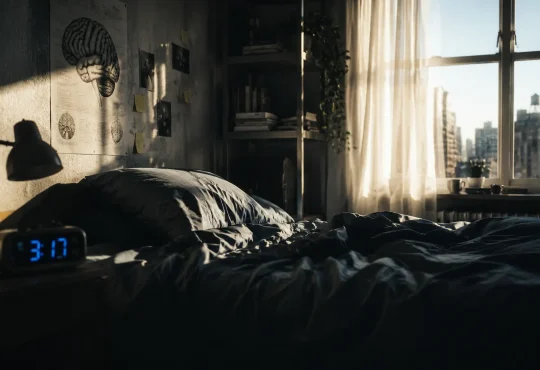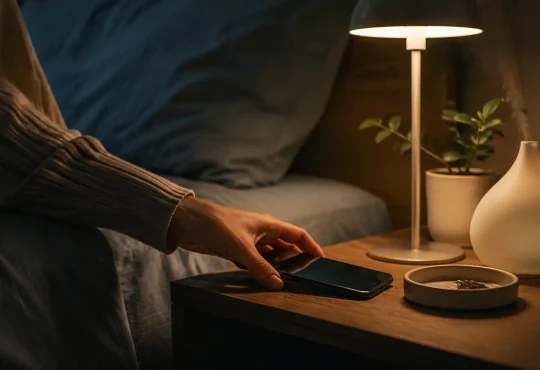

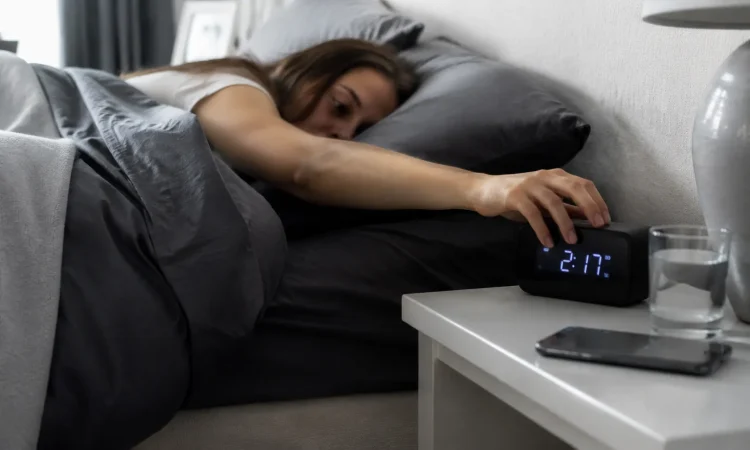
You’ve done everything right. You went to bed at a reasonable hour. You put your phone down well, mostly. You even tried counting your breaths for a few minutes. And yet, at 2:17 a.m., you’re on your back staring at the ceiling again, mind restless, body annoyingly awake. The frustrating part isn’t the sleeplessness itself. It’s the mystery of it.
Most people assume insomnia is about stress, caffeine, or screen time. And sure, those matter. But there’s a quieter category of culprits the ones hiding in plain sight inside the room where you sleep. They don’t announce themselves. They’ve become so familiar you’ve stopped noticing them. That’s exactly what makes them dangerous.
The Temperature Game You Didn’t Know You Were Losing
Here’s something your body does every single night without your permission: it starts cooling itself down in preparation for sleep. Core body temperature drops by roughly one to two degrees Fahrenheit as part of the natural sleep onset process a biological signal that tells your brain it’s time to shut down. This process is extraordinarily sensitive. And your bedroom temperature can either assist it or quietly sabotage it.
Most sleep researchers point to a range somewhere between 65 and 68 degrees Fahrenheit as optimal for most adults. But the real issue isn’t just the thermostat. It’s the microclimate inside your bed. A mattress that traps heat, flannel sheets in October that feltcozy when you bought them but now create a kind of humid pocket around your body, a heavy duvet that made sense in December but hasn’t been swapped out since these are the everyday details that create a thermal environment your nervous system quietly resists.
What makes this trigger so sneaky is that you often don’t feel hot in any dramatic way. You might just feel faintly uncomfortable, slightly restless, unable to stay in one position. You’ll kick a leg out from under the covers and briefly feel better, then pull it back in and start the cycle again. Your brain never quite gets the coolingcue it needs, and sleep stays shallow.
The fix is almost embarrassingly simple cooler room, lighter layers, breathable materials but you have to recognize the problem first.
Light That Lingers Long After Sunset
The human eye contains specialized photoreceptors called intrinsically photosensitive retinal ganglion cells a term worth knowing, even if only to appreciate how seriously your biology takes light. These cells are particularly sensitive to blue-wavelength light, and they feed information directly to the suprachiasmatic nucleus, which is the brain’s master clock. When these cells detect light, especially blue light, they suppress melatonin production and push your internal clock forward, telling your body it’s earlier in the day than it is.
You’ve probably heard this framed as a screen time warning, and that’s fair. But the light problem in your bedroom runs deeper than your phone. Consider the standby indicator on your TV a small red or blue dot that seems trivial. Or the streetlight that bleeds around the edge of curtains that were never quite thick enough. The digital clock on your nightstand, the router blinking in the corner, the ambient glow from a hallway left lit for kids or pets. None of these individually seems significant. Together, they create a room that is never truly dark.
Human beings evolved to sleep in near-total darkness. The idea that we can simply “get used to” ambient light in the bedroom misunderstands how the system works. Adaptation, in this case, isn’t the same as neutralizing the effect. Your melatonin can still be subtly suppressed even when you’ve stopped consciously noticing the glow.
Blackout curtains are one solution, but sometimes the light is coming from inside the room. A piece of black electrical tape over a blinking indicator, a cloth over the router, moving the digital clock to a drawer these small acts of darkness are underrated interventions.
Sound You’ve Learned to Ignore (But Haven’t)
There’s a distinction in sleep science between sounds that wake you up and sounds that fragment your sleep without fully waking you. The second category is far more common and far more underestimated. Your brain continues processing auditory information during sleep, particularly during lighter stages. A car passing outside, a refrigerator cycling on, a partner shifting in bed none of these need to jolt you into full consciousness to do damage. They can repeatedly nudge you toward waking, creating a night of broken sleep architecture that leaves you feeling exhausted even after seven or eight hours in bed.
The insidious part is memory. You won’t necessarily remember these micro-arousals in the morning. You’ll just wake up feeling inexplicably unrefreshed, convinced you slept fine but somehow didn’t. This is how a noisy environment can gaslight you about your own sleep quality.
The fix here isn’t necessarily silence complete silence can itself be alerting to some people, particularly those who’ve grown up in urban environments. What matters is consistency. Irregular, unpredictable sounds are the enemy. White noise machines work not by drowning out all sound, but by creating a consistent auditory floor that makes sudden variations less jarring. A fan, a humidifier, a dedicated sound device all serve the same purpose. They give your brain something steady to settle against.
The Psychological Weight of the Room Itself
This last trigger is the strangest one, and the most personal. Your bedroom exists as a physical space, but it also exists as a mental category. The way you use it, the objects you keep in it, the associations you’ve built around it over months or years these things shape how your nervous system responds to being inside it.
If you regularly work from your bed, answer emails propped against the headboard, eat meals while watching something on a laptop, or spend hours scrolling before eventually putting the phone down and trying to sleep, you’ve been engaged in a gradual process of conditioning. Your brain has learned that the bed is a place of stimulation and activity, not just rest. The technical term is stimulus control the idea that environments become associated with the behaviors we repeatedly perform in them. When the bedroom becomes a multipurpose space, the association with sleep weakens.
This doesn’t require dramatic life upheaval to address. It requires patience and repetition. Using the bed only for sleep (and sex) is the classic clinical recommendation, and it works because it slowly rebuilds the conditioned association. Leaving the bedroom when you can’t sleep after about twenty minutes instead of lying there frustrated is part of the same logic. Frustration becomes its own trigger. Lying awake, watching the minutes pass, actively wanting sleep and failing to find it: that emotional state gets layered into the room’s psychological charge. Eventually, getting into bed can trigger wakefulness almost reflexively.
There’s something worth sitting with here. Sleep is one of the only human functions that gets worse the harder you try to force it. The bedroom, at its best, should be a place where effort dissolves where the environment itself does most of the work of pulling you under. When it stops doing that job, it’s rarely because of one dramatic problem. It’s usually the accumulation of small, overlooked details: a room that’s too warm, too bright, too loud, or too mentally loaded.
None of this requires a complete bedroom overhaul. But it does require looking at the room with fresh eyes not as a backdrop to your life, but as an active participant in how well you sleep.