

The Shift Worker’s Manual: How to Stay Healthy When the World Is Awake
The Body Wasn’t Built for This But Here You Are
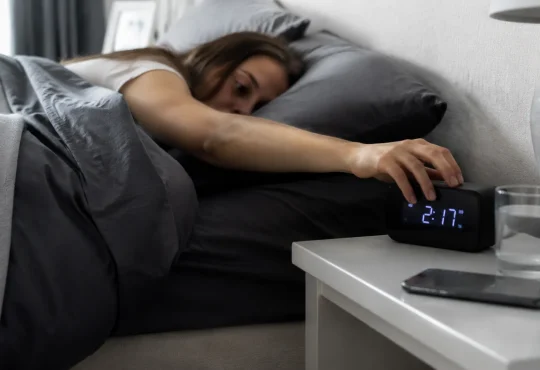
There’s a particular kind of exhaustion that shift workers know and non-shift workers don’t. It’s not the tiredness you feel after a long day at a desk. It’s deeper, stranger a feeling that you’re slightly out of phase with the rest of the world, like a song playing half a beat behind the rest of the band. You drive home at 7 a.m. while everyone else is heading to work. You eat dinner when the sun is still high. You tell yourself you’ll sleep, but the garbage trucks come, and the neighbors mow their lawns, and the light comes through the curtains in ways it was never designed to be ignored.
About15 million Americans work non-traditional hours nights, rotating shifts, early mornings that start before5 a.m. That’s nurses, factory workers, long-haul dispatchers, emergency responders, bakers, and overnight security guards. The world runs on their labor, around the clock. And in return, their bodies absorb a punishment that accumulates quietly over years.
This isn’t a piece that will tell you it’s easy. It isn’t. But it also isn’t hopeless, and the difference between shift workers who stay relatively healthy and those who spiral into chronic illness often comes down to a handful of deliberate, repeatable habits not heroics.
What the Clock Does to the Body
Your circadian rhythm is not a metaphor. It’s a real, biological timing system wired into nearly every cell in your body. It tells your gut when to expect food, your liver when to detoxify, your immune system when to ramp up, your heart when to slow down. This system evolved over millions of years under one reliablecue: sunlight. When you work nights and sleep days, you’re essentially asking all those systems to operate on a schedule that contradicts every signal your body is receiving from the outside world.
The consequences aren’t subtle. Research from Harvard Medical School and other institutions has linked chronic shift work to higher rates of cardiovascular disease, metabolic syndrome, type 2 diabetes, certain cancers, and compromised immune function. Cortisol the hormone that’s supposed to spike in the morning and help you feel alert gets dysregulated. Melatonin production, which should rise in darkness to trigger sleep, gets suppressed by daytime light. Your appetite hormones go sideways, making you crave calorie-dense foods at exactly the wrong times.
None of this is meant to scare you. It’s context. Because once you understand what’s actually happening under the surface, the practical strategies stop feeling like arbitrary advice and start feeling like targeted interventions.
Sleep Is the Non-Negotiable
Everything else in this manual depends on sleep. Not because it’s the only thing that matters, but because without adequate sleep, every other healthy habit you try to build will erode from underneath. You won’t have the willpower to eat well. You’ll skip exercise. Your mood will suffer, and your risk-taking goes up in ways you may not even notice.
The challenge for shift workers is that daytime sleep is structurally inferior. The architecture of daytime rest is lighter, more fragmented, and shorter on average than nocturnal sleep. This is partly because of light, partly because of noise, and partly because your circadian system is actively working against you during those hours.
What actually helps: blackout curtains are worth every dollar. Not just dark curtains full blackout. The kind that make your bedroom feel like a cave at noon. A white noise machine or a simple box fan does more than most people expect, drowning out the street sounds that jolt you awake. And the phone turn it face down, use Do Not Disturb, make family members understand that your sleep hours are not optional quiet time. They’re medical necessity.
Some shift workers find success with what’s sometimes called a split sleep schedule: sleeping for four to five hours immediately after a night shift, then napping for another ninety minutes to two hours in the early evening before the next shift. This isn’t ideal, but it works with your biology better than fighting to get a single long stretch in the middle of the day when your body refuses to cooperate.
Eating Against the Clock
Your digestive system has its own clock. Insulin sensitivity meaning how efficiently your body processes carbohydrates is naturally higher earlier in the day and lower at night. When you eat a large meal at 3 a.m., your body handles it differently than if you’d eaten that same meal at noon. The result over time can be elevated blood sugar, weight gain around the midsection, and a creeping risk of metabolic disorder.
Shift workers who eat erratically, graze on whatever is available in break rooms, or skip meals entirely and then overeat when they finally get home are setting themselves up for this pattern. It doesn’t require perfection to disrupt it. It requires intention.
The most useful frame here is this: eat your largest meal at the start of your shift, not the end. Bring food from home when you can, because hospital vending machines and24-hour fast food options are not your friends at 2 a.m. Keep your overnight eating lighter protein and fat hold you over without the blood sugar spike that comes from a bag of chips or a sugary drink. And hydrate consistently, because fatigue and dehydration are so symptomatically similar that most people can’t tell them apart.
Caffeine is its own conversation. There’s nothing wrong with using it strategically. The mistake most shift workers make is drinking coffee too close to the end of the shift, which then sabotages the sleep they desperately need. A practical rule: stop caffeine intake at least five to six hours before you plan to sleep. If your shift ends at 6 a.m. and you want to be asleep by 8, your last coffee should happen before 2 a.m.
Movement When You’re Already Running on Empty
It feels almost insulting to talk about exercise to someone who just worked a twelve-hour overnight. And yet. Physical activity is one of the few tools that directly counteracts some of the worst effects of shift work it improves sleep quality, stabilizes mood, reduces cardiovascular risk, and helps regulate the metabolic dysfunction that shift schedules cause.
It doesn’t have to be a gym session at 7 a.m. after a night shift. That’s not sustainable. What’s more realistic is a twenty to thirty minute walk before your shift, or light movement during breaks. Some shift workers find that timing exercise to the middle of the day several hours before a night shift starts improves their alertness through the early part of the shift. Others prefer morning exercise after sleeping, treating it as a transition ritual that signals to the body that it’s time to be awake.
The goal is consistency over intensity. A walk you actually take is worth more than a gym session you keep postponing.
The Social Weight Nobody Talks About
One of the most underacknowledged costs of shift work is relational. You miss dinners, kids’ bedtimes, weekend mornings, and the casual social rhythm that most people don’t even notice they’re participating in. Over time, this creates a kind of ambient loneliness that compounds the physical toll. And loneliness, research continues to confirm, is a genuine health risk not a soft, psychological one, but a measurable physiological one that affects immune function and cardiovascular health.
Being deliberate about social connection takes on a different shape when you work non-traditional hours. It might mean protecting certain days off as completely sacred from extra shifts, even when the overtime is tempting. It means communicating honestly with the people in your life about what you need and sometimes finding community specifically within the world of shift workers, people who understand why you can’t make a Saturday brunch at 10 a.m. because that’s when you’re finally, finally asleep.
There’s no tidy resolution to the tension between shift work and a conventional social life. But treating your relationships as part of your health plan not separate from it changes how you prioritize the time you do have.
Building a Routine in a Life Without Routine
The deepest challenge of shift work is that it disrupts the very thing that makes healthy habits stick: consistency. Routines are powerful precisely because they reduce the cognitive load of decision-making. When your shift pattern rotates, or when you’re covering different days each week, building any consistent structure feels Sisyphean.
The way through it isn’t to build a perfect routine. It’s to identify a handful of anchoring behaviors that you maintain regardless of what shift you’re working. A consistent wind-down sequence before sleep, no matter what time sleep happens. A meal prep habit that ensures you have real food available when fast food would otherwise win. A signal to your body a short walk, a specific playlist, a set of stretches that functions as a transition between work mode and rest mode.
These anchors don’t eliminate the chaos. They just give you handholds inside it. Shift work will always be harder on the body than a conventional schedule. That’s not a belief it’s physiology. But the gap between thriving and grinding through isn’t as wide as it might feel at the end of a long night. It’s made up of small, repeated decisions, most of which are well within reach.