

The Lazy Girl’s Guide to Eating Healthy Before 8 AM
There’s a version of a healthy morning that exists in your head. She wakes up at 5:45, pulls on her linen robe, and blends something green and gorgeous while the sunrise does its thing through the kitchen window. She has a routine. She has a cutting board that doesn’t have stains on it.
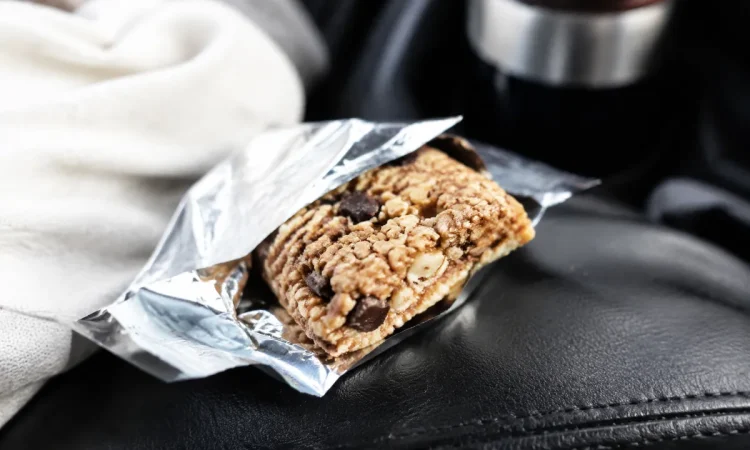
Then there’s the actual morning. The alarm goes off, you hit snooze twice, and suddenly you have twenty minutes to exist as a human being before you have to be somewhere. Breakfast becomes whatever survives the chaos a granola bar from the back of a drawer, black coffee on an empty stomach, or honestly nothing at all.
Here’s the thing, though: eating well before 8 AM doesn’t actually require that woman with the linen robe. It requires a little strategy, and a willingness to be honest about who you really are before you’ve had caffeine.
Why Mornings Feel Impossible (And Why That’s Not a Character Flaw)
The cultural narrative around healthy eating tends to assume a level of executive function that most people simply don’t have at 6 AM. Nutrition advice is almost always written for someone who is already awake, already motivated, and already standing in front of a well-stocked fridge. It doesn’t account for decision fatigue, for the particular fog of early morning, or for the fact that willpower is genuinely at its lowest when you’ve just dragged yourself out of bed.
Research in behavioral science backs this up. The brain takes time to reach full cognitive capacity after waking, and the prefrontal cortex the part responsible for planning, self-control, and good decisions is essentially still booting up for the first thirty to forty-five minutes of your day. Asking yourself to make complex nutritional choices in that window is a bit like asking someone to write a performance review while they’re still half-asleep. The system isn’t ready.
The solution isn’t discipline. It’s design. You reduce the number of decisions. You make the healthy choice the easy choice, the one that’s just sitting there, already done, waiting for you.
The Night Before Is Actually the Morning
Counterintuitive as it sounds, a good morning meal starts the evening before. Not with elaborate prep, not with containers and labels and a whole production just small moves that remove friction.
Overnight oats became a cliché for a reason. A jar with half a cup of rolled oats, a cup of milk or whatever you’re using instead, a spoonful of nut butter, and something sweet honey, a few chocolate chips, whatever you’ll actually eat takes about four minutes to assemble and sits in the fridge until morning. You don’t cook it. You don’t blend it. You open the fridge and eat it cold, right out of the jar if you want. That’s it.
The same logic applies to hard-boiled eggs, which you can make a batch of on Sunday and pull from all week. Or to cutting fruit the night before. Or to portioning out nuts into a small bowl so that when you’re standing in the kitchen in a semi-conscious state, there’s already a reasonable snack waiting instead of the open cabinet of chaotic options that leads to eating cereal out of the box over the sink.
What you’re really doing is making decisions for your future, exhausted self. She doesn’t have the bandwidth. Do it for her.
The Protein Problem Nobody Talks About
Most convenient breakfast foods are carbohydrate-heavy and protein-light. Toast, cereal, pastries, fruit these aren’t bad foods, but if they’re all you’re eating, they tend to spike blood sugar and then drop it fast, which is why you feel vaguely shaky and resentful by10 AM and start eyeing the office snack bowl with real intensity.
Protein in the morning is genuinely different from protein later in the day. It slows down the absorption of carbohydrates, keeps you feeling fuller longer, and has been shown in multiple studies to reduce overall calorie intake throughout the day without any intentional restriction. It also just makes the meal feel more satisfying less like a placeholder and more like actual food.
The lazy girl’s protein options are honestly pretty great. Greek yogurt, eaten straight from the container, clocks in around 15 to 20 grams depending on the brand. A couple of eggs scrambled in a pan takes under three minutes if you’re not being precious about it. Cottage cheese, which had a well-deserved moment recently, is high in protein and requires zero preparation. Even a glass of milk while you’re waiting for your coffee covers more ground than people give it credit for.
The goal isn’t to build a bodybuilder’s breakfast. It’s to include at least one thing that has actual staying power so that the rest of your morning isn’t defined by hunger you’re ignoring.
The Five-Minute Breakfast That Actually Works
You’ve probably heard some version of “it only takes five minutes” and mentally rolled your eyes, because five minutes always turns out to mean fifteen once you account for finding the pan and realizing you’re out of something. So here’s a genuinely minimal version.
A banana or an apple. A single-serve Greek yogurt cup or a hard-boiled egg from the batch in your fridge. A small handful of almonds or walnuts. Coffee.
That’s it. No cooking. No blending. No cleanup beyond a spoon if you need one. The total prep time is closer to ninety seconds, the nutrition is solid protein, fat, fiber, carbohydrates, all represented and you eat it standing at the counter or on the way out the door.
The version slightly above that, for mornings when you have five actual minutes and a pan: two eggs, scrambled with a pinch of salt, folded into a piece of toast or eaten on their own. Grab a piece of fruit on the way out. You just had a genuinely good breakfast and it cost you almost nothing.
The mental shift that makes both of these work is giving yourself permission to not perform breakfast. It doesn’t have to be beautiful or Instagram-worthy or anything other than functional. Food eaten before 8 AM has one job: to fuel you without making your morning harder.
Coffee Is Not Breakfast, But It Doesn’t Have to Be the Enemy
A lot of people drink coffee in the morning and skip food, either because they don’t feel hungry or because the caffeine genuinely suppresses appetite for a while. This is real caffeine does blunt hunger signals, and if you’ve been doing it for years, your body may have adjusted to not expecting food early.
The problem isn’t the coffee. It’s that the appetite suppression eventually wears off, usually at the worst possible moment a meeting, a commute, an hour before lunch when there’s nothing around to eat. Then you either power through feeling terrible or you eat something impulsive and not particularly nourishing.
The practical move is to eat something alongside the coffee, even if it’s small and even if you’re not particularly hungry. A few bites of something with protein literally half a hard-boiled egg, a small spoonful of peanut butter, a couple of cubes of cheese is enough to stabilize blood sugar and keep the crash from arriving on a schedule.
If black coffee is sacred to you and the thought of eating with it is offensive, at minimum wait to have the coffee until after you’ve had at least a small amount of food. Your cortisol levels are already elevated in the morning. Black coffee on an empty stomach amplifies that, which is the physiological reason so many people feel anxious or jittery before noon.
What “Healthy” Actually Means at This Hour
The word healthy carries a lot of noise. It gets tangled up with diet culture and optimization language and the idea that every meal needs to be perfectly balanced or it doesn’t count. That framing is exhausting, and it’s especially counterproductive in the morning.
A healthy breakfast before 8 AM isn’t a juice cleanse or a carefully portioned plate. It’s food that helps you function that gives you enough energy to get through the first part of your day, keeps you from being hungry and irritable before lunch, and doesn’t require so much effort to produce that you give up and skip it entirely.
Some days that’s overnight oats with berries. Some days it’s a banana and a handful of almonds eaten in the car. Both of those are fine. Both of those are better than nothing, and both of those are better than the granola bar from the back of the drawer that’s mostly just sugar.
The only habit that actually matters is the one you’ll repeat tomorrow. Make it small enough that skipping it feels like more trouble than doing it. And then just do that, at whatever pace works, until it stops feeling like discipline and starts feeling like just what you do in the morning.