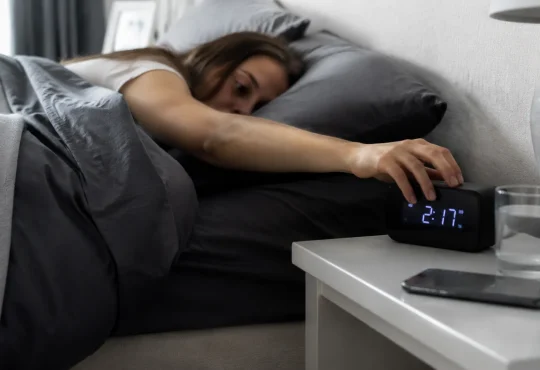


Every afternoon, somewhere around three o’clock, a quiet crisis unfolds across offices, kitchens, and home desks worldwide. Eyes go heavy. Thoughts turn sluggish. The screen starts to blur. You reach for coffee, maybe a handful of chips, maybe both anything to shake the fog. And then comes the familiar self-diagnosis: I shouldn’t have had that big lunch. I stayed up too late. I need more caffeine.
But what if the slump has almost nothing to do with any of those things?
The Clock You Didn’t Know You Were Running On
Inside every human body is a biological timing system so precise it could shame most Swiss watches. The circadian rhythm driven by a cluster of roughly 20,000 neurons in the hypothalamus called the suprachiasmatic nucleus doesn’t just regulate sleep. It orchestrates body temperature, hormone secretion, digestion, immune function, and yes, alertness, on a near-24-hour cycle.
Here’s the part most people miss: that cycle isn’t a smooth, steady arc. It has peaks and valleys. The biggest alertness peak for most adults falls somewhere between late morning and early afternoon. Then, predictably, there’s a trough a dip in core body temperature and a corresponding drop in cognitive performance. For the average person operating on a conventional schedule, that trough lands squarely in the mid-afternoon. Around3 PM.
This is not a malfunction. It’s a feature. Many researchers believe this post-lunch dip is actually an evolutionary holdover, a signal embedded in primate biology that once encouraged a brief rest during the hottest, most dangerous part of the day. The Spanish siesta, the Mediterranean riposo, the post-lunch nap culture found across equatorial regions none of these are cultural laziness. They’re societies that organized themselves around a biological reality.
So when you feel like you’re failing at the afternoon, you’re actually just feeling your circadian rhythm doing exactly what it evolved to do.
Then Why Does Coffee Fix It?
This is where the story gets more complicated and more interesting.
Caffeine works by blocking adenosine receptors in the brain. Adenosine is a byproduct of neural activity, and it accumulates throughout the day, creating progressive sleepiness. The more awake you’ve been, the more adenosine has built up, and the drowsier you feel. Caffeine doesn’t actually give you energy in any metabolic sense. It just plugs the receptors that would otherwise be broadcasting the “you’re tired” signal. The energy was always yours. Caffeine just silences the memo.
Now here’s the cruel irony of the morning coffee ritual: when you drink coffee first thing after waking, you’re blocking adenosine at a time when your cortisol is already naturally high and your circadian alertness is already climbing. You get a jolt, sure, but you’ve also set yourself up. The caffeine wears off in four to six hours. Adenosine that was blocked all morning suddenly floods back. And when does that tend to happen? Mid-afternoon.
Neuroscientist Andrew Huberman and sleep researcher Matthew Walker have both discussed this phenomenon at length the way habitual morning coffee consumption can create an artificial trough in the afternoon that compounds the natural circadian dip. You’re not just experiencing a body clock valley. You’re experiencing a body clock valley plus caffeine rebound plus accumulated sleep debt. The slump hits harder, lasts longer, and feels more desperate than it needs to.
So yes, coffee withdrawal is real. And yes, it is partly to blame. But it’s happening on top of a pre-existing biological dip, not instead of it.
The Lunch Myth
For decades, the post-lunch crash was blamed almost entirely on the meal itself specifically the glycemic spike and subsequent insulin response that follows carbohydrate-heavy eating. Eat a bowl of pasta, get a blood sugar crash around 3 PM. It’s a tidy explanation, and it’s not entirely wrong.
But it’s far less complete than we assumed. Studies conducted on people who ate no lunch at all still documented the afternoon alertness dip. The dip was shallower, yes, but it was there. Meal timing and composition can modulate the severity of the slump, but they don’t cause it. The circadian trough was always going to happen. Lunch just pours fuel on a fire that was already lit.
What this means practically: swapping your pasta for a salad might take the edge off, but it won’t save you from the 3 PM valley. Neither will eating nothing. The underlying rhythm continues regardless.
What Your Body Is Actually Asking For
The most scientifically honest answer to the mid-afternoon slump is also the one modern work culture is least equipped to accommodate: a short nap.
Not a two-hour sprawl. Research consistently points to the “nap sweet spot” sitting somewhere between 10 and 20 minutes long enough to allow the lightest stages of sleep and flush some accumulated adenosine, short enough to avoid sleep inertia, that grogginess that comes from waking mid-cycle. NASA conducted studies on its pilots and found that a 40-minute nap improved performance by 34% and alertness by 100%. Companies like Google, Nike, and Ben & Jerry’s have installed nap pods or rest rooms precisely because the productivity math stopped being ignorable.
The afternoon nap, in other words, isn’t a surrender to fatigue. It’s a performance tool that most of the world has deprogrammed itself out of using.
For those who truly cannot nap at work which is most people in most jobs there are useful middle grounds. A 10-minute walk outdoors exposes the eyes to natural light, which sends a resetting signal to the circadian system. Strategic caffeine timing (delaying that first cup until 90 to 120 minutes after waking, when cortisol has already begun its natural descent) can prevent the afternoon rebound from being as sharp. Protein-forward lunches with lower glycemic loads reduce the meal-amplified component of the dip. None of these are magic. They’re adjustments that work with the circadian rhythm rather than against it.
The Deeper Question
There’s something worth sitting with in all of this. The 3 PM slump is treated, almost universally, as a problem to be solved a failure of willpower, diet, or sleep hygiene to be corrected through better habits and stronger coffee. But it’s possible to look at it differently.
The body is communicating something it has been communicating for millions of years. It’s saying: slow down. Rest. There’s wisdom in the valley, even if the modern world has no structural place for it. The relentless push to override every biological signal with caffeine and screens and sheer determination isn’t productivity. It often isn’t even effective. It’s just noise.
Understanding the3 PM slump really understanding it, as a convergence of circadian biology, adenosine dynamics, and meal timing doesn’t just explain why you feel like you’re dissolving at your desk every afternoon. It also quietly reframes what it would mean to actually feel better. Not just to push through, but to stop treating your own biology as the enemy.
The clock is running exactly as designed. The question is whether you’re willing to work with it.