

Reclaim Your Energy by Syncing with Nature’s Light Cycle
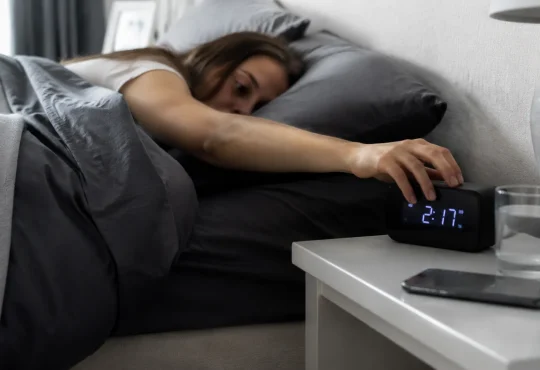
There’s a particular kind of exhaustion that no amount of sleep seems to fix. You wake up groggy, drag yourself through the morning, hit a wall around two in the afternoon, and then cruelly feel wide awake at eleven at night when you should be winding down. Millions of people live this way, treating it as a personality quirk or an unavoidable side effect of modern life. But this pattern isn’t random. It’s the signature of a body that has lost its connection to light.
Light is not just how we see the world. It is the oldest clock in biology.
The Ancient Agreement Between Life and Light
Long before electricity, every living organism on Earth organized its chemistry around the predictable rhythm of day and night. Plants, fungi, insects, mammals all evolved with an internal timekeeping system calibrated to sunlight. In humans, this system is run by a pea-sized structure in the brain called the suprachiasmatic nucleus, or SCN. Think of it as your master conductor, coordinating when you feel alert, when you digest food efficiently, when your immune system runs its maintenance routines, and when you release melatonin to prepare for sleep.
The SCN does not operate on guesswork. It takes its primarycue from light entering the eyes specifically short-wavelength blue light that signals “daytime” to the brain. When morning light hits specialized cells in the retina called intrinsically photosensitive retinal ganglion cells, a biochemical cascade begins. Cortisol rises. Core body temperature climbs. Metabolism shifts into active gear. You are, quite literally, being switched on by the sun.
This system is ancient, precise, and surprisingly fragile in the context of modern life.
What Went Wrong When We Turned the Lights On
The industrial revolution was less than two hundred years ago. The smartphone is barely fifteen years old. In evolutionary terms, these are blinks. Our circadian biology had no time to adapt to the flood of artificial light that now saturates our evenings the overhead LEDs, the blue-tinted laptop screens, the phones we scroll through in bed while our brains keep insisting it must still be afternoon.
The damage is cumulative and quiet. Every night you expose your eyes to bright artificial light after sunset, you push your melatonin release later. Your sleep onset shifts. You accumulate what researchers call social jetlag a chronic misalignment between your internal clock and the schedule your life demands. Studies from Harvard Medical School and the Salk Institute have linked circadian disruption not just to fatigue and poor sleep, but to metabolic dysfunction, mood disorders, impaired immune response, and a measurably higher risk of cardiovascular disease.
Here is the part that doesn’t get enough airtime: you can feel the effects of circadian disruption without ever identifying the cause. Afternoon crashes, persistent brain fog, difficulty regulating mood, cravings for sugar and caffeine these are often not character flaws or stress responses. They are the symptoms of a body that cannot find its rhythm because the light signals it depends on have become incoherent.
Morning Light Is Not Optional
The single highest-leverage thing you can do for your energy and sleep quality costs nothing and takes less than fifteen minutes. Get outside within an hour of waking and expose your eyes to natural daylight.
This sounds almost insultingly simple, and that is precisely why most people skip it. We are conditioned to believe that health optimization requires discipline, expense, and complexity. A morning walk around the block with no headphones, just sunlight that can’t really be the thing, can it?
It really can. Neuroscientist Andrew Huberman at Stanford has spent years researching how morning light exposure anchors the cortisol pulse that sets your circadian timer for the entire day. The timing matters. In the first one to three hours after waking, your body is primed to receive that photonic signal. Light through a window does not produce the same effect glass filters out much of the relevant spectrum, and indoor light is typically ten to fifty times dimmer than overcast outdoor light. On a bright day, stepping outside for even ten minutes delivers enough photons to meaningfully shift your alertness, mood regulation, and fourteen to sixteen hours later your sleep quality.
The mechanism is elegant. Morning light triggers a timed cortisol spike that, paradoxically, sets the countdown for your melatonin release that evening. The clearer and more consistent that morning signal is, the more reliably your body knows when to start winding down at night.
The Evening Side of the Equation
Resetting your mornings is only half the equation. The evening environment matters just as much, and this is where most people’s environments work directly against them.
After sunset, your body expects darkness or at minimum, dim, warm-toned light that does not register as “day” to the SCN. Bright overhead lighting, especially the cool-white LEDs common in modern homes and offices, suppresses melatonin production with surprising efficiency. A2022 study published in the Journal of Biological Rhythms found that overhead room light in the evening delayed melatonin onset by up to ninety minutes compared to dim light conditions.
The practical response doesn’t require living by candlelight. It requires intentional light architecture. Switching your primary light source to floor lamps and table lamps after sunset keeps the overhead brightness out of your direct line of sight. Warmer color temperatures below3000 Kelvin, the amber and orange range are far less disruptive than the5000-6500 Kelvin white and blue-white lights that dominate most living spaces. Screen use after dark is best reduced, and when unavoidable, tools like Night Shift, f.lux, or a blue light filter bring the color temperature of your display toward the warmer end.
None of this requires perfection. The goal is a general gradient brighter and bluer in the morning, progressively dimmer and warmer as the evening deepens. Your biology responds to patterns, not single data points.
The Afternoon Nobody Talks About
There is a quiet window in the middle of the day that most people either ignore or misunderstand: the afternoon dip.
Between roughly one and three p.m., human alertness naturally dips as part of the circadian rhythm a post-lunch valley that has nothing to do with how much you ate. Many cultures built rest into this window for exactly this reason. The Spanish siesta, afternoon napping in many Mediterranean and South American cultures, the traditional Chinese midday rest these weren’t inefficiencies. They were adaptations.
If a short rest is possible during this window, a ten-to-twenty-minute nap can reset afternoon alertness without interfering with nighttime sleep. If sleep isn’t feasible, getting outside for natural light during this period does something interesting: it reinforces your circadian signal midday, helping bridge the gap between your morning anchor and your evening wind-down. Even a ten-minute outdoor walk during the afternoon slump can noticeably sharpen cognitive performance in the hour that follows.
Why This Is Deeper Than a Sleep Hack
It is tempting to frame all of this as a productivity tip a biohack for better focus and fewer3 p.m. crashes. And yes, it works for that. But the implications run considerably deeper.
Chronic circadian misalignment is now understood as a background condition affecting hundreds of millions of people who have never received a diagnosis, because there is no diagnosis for it. It shows up as persistent low-grade fatigue, emotional volatility, difficulty concentrating, weakened immunity, disrupted hunger hormones, and a subtle but pervasive sense of being out of sync with yourself. People medicate these symptoms with caffeine, sugar, alcohol, sleeping pills, and antidepressants sometimes when the root issue is simply that their internal clock has lost its reference point.
Reconnecting with natural light cycles is not a cure-all, and it would be dishonest to present it as one. But it is one of the few interventions that addresses the regulatory layer underneath many of these symptoms rather than managing them individually. It works with the machinery that was already installed in you, refined across millions of years, waiting for a signal it recognizes.
The sun rises every morning. That signal hasn’t changed. What has changed is whether we’re there to receive it.