
The Guilt Is Probably Doing More Damage Than the Sleep Loss
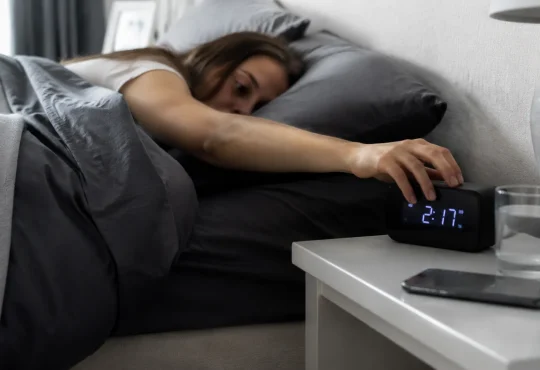
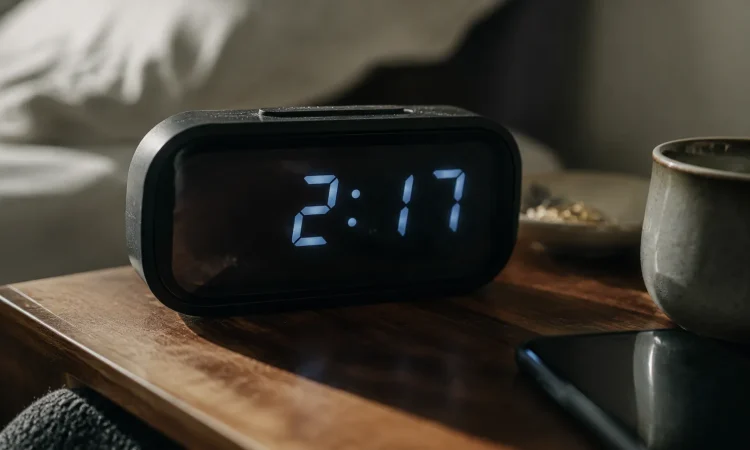
You already know you should be getting eight hours. You know you shouldn’t be scrolling at midnight, or drinking coffee at 4 p.m., or staying up until 2 a.m. watching something you’ve already seen twice. You know all of this. And yet here you are, awake at an hour that embarrasses you, already mentally composing the apology you’ll deliver to yourself in the morning.
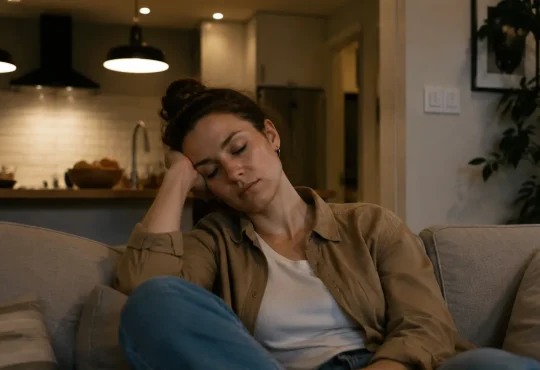
That apology that low, persistent hum of self-blame is worth examining, because it has become its own problem. Separate from the sleep deprivation itself, the guilt has taken up residence in a way that makes everything worse. You wake up tired and immediately layer shame on top of it. You start the day already behind, already failing, already owing a debt to some imagined version of yourself who goes to bed at ten and wakes up refreshed and serene.
Here’s the thing no one quite says out loud: that guilt is not motivating you. It’s not nudging you toward better habits. It’s just making the existing exhaustion heavier.
Where the Sleep Guilt Comes From
Wellness culture has done something quietly insidious to the way we think about sleep. Over the past decade, sleep has been elevated from basic biological function to moral category. Books with titles about optimizing your sleep, podcasts dedicated to sleep hygiene, social media posts about the exact sequence of rituals that will guarantee unconsciousness all of it has contributed to a worldview where good sleepers are disciplined, virtuous, high-functioning humans, and bad sleepers are people who simply haven’t tried hard enough.
This framing ignores almost everything real about how sleep actually works. It ignores the fact that sleep is regulated by systems you don’t consciously control circadian rhythm, adenosine buildup, cortisol cycles and that those systems vary enormously between individuals. A night owl isn’t choosing inconvenience. Their body’s melatonin onset genuinely runs later. Telling them to just go to bed earlier is roughly as useful as telling someone to just be taller.
It also ignores the texture of modern life. The person lying awake at 1 a.m. is often not there because they lack discipline. They’re there because that’s the first quiet hour they’ve had all day. The house is finally still. No one needs anything. The inbox is closed. For a lot of people parents, caregivers, people working multiple jobs late nights aren’t a failure of willpower. They’re the only space available for decompression, for something that resembles leisure, for just being a person rather than a function.
Revenge Bedtime Procrastination, and Why It Makes Sense
There’s a term that traveled through psychology circles a few years ago and hit a nerve with a remarkable number of people: revenge bedtime procrastination. The idea is that people who feel they have little control over their daytime hours will unconsciously delay sleep as a way of reclaiming time for themselves. It’s not recklessness. It’s a negotiation with a schedule that has left no room for anything enjoyable.
When you understand sleep deprivation through that lens, the guilt calculus shifts. You’re not failing at a simple task. You’re managing a genuine resource scarcity time, autonomy, rest with the tools available to you. The solution isn’t to shame yourself into bed earlier. It’s to look honestly at what the late-night hours are providing, and whether there’s a way to get some of that elsewhere.
That’s a structural problem, not a character flaw. And structural problems don’t respond to guilt.
What Science Actually Says About “Bad” Sleep
The eight-hour rule deserves some scrutiny. It comes largely from epidemiological studies that found associations between short sleep duration and various health risks. What those studies don’t capture particularly well is variability. Some people function at a genuinely high level on six hours. Some people need nine. The population average doesn’t prescribe individual need, and using it to does is a misreading of how that research works.
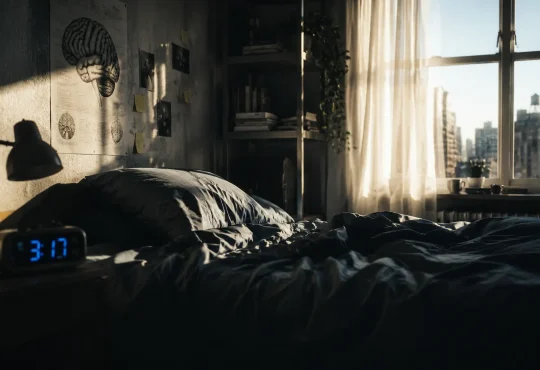
There’s also the matter of sleep architecture the way sleep is structured across a night. For most of human history, biphasic sleep (sleeping in two distinct segments, often with an hour or two of wakefulness in between) was common and considered entirely normal. The consolidated eight-hour block is arguably a relatively recent cultural expectation, shaped by industrial schedules and electric light. When you wake at 3 a.m. and can’t fall back asleep immediately, you may not be disordered. You might just be running older software.
None of this means sleep doesn’t matter, or that chronic deprivation carries no consequences. It does. But the gap between “suboptimal sleep” and “serious harm” is wider and more nuanced than wellness culture tends to represent. A few late nights, an irregular schedule, a rough patch during a stressful period these are normal human experiences. They are not evidence of systemic self-neglect.
Getting Practical Without Getting Punitive
If you want to sleep better and you probably do, since you’re reading this the entry point matters. Starting from guilt is like trying to run with a weight strapped to your chest. You might move, but everything costs more.
Starting from curiosity is more useful. What actually happens in the hour before you can’t sleep? Not what you think should happen, or what the sleep hygiene guidelines say should happen but what actually does? Is there something you’re using late nights to avoid? Is there an anxiety that surfaces when the stimulation stops? Is your bedroom associated with work because that’s where you’ve been doing it for three years?
These are questions, not indictments. They point toward adjustable variables rather than character conclusions.
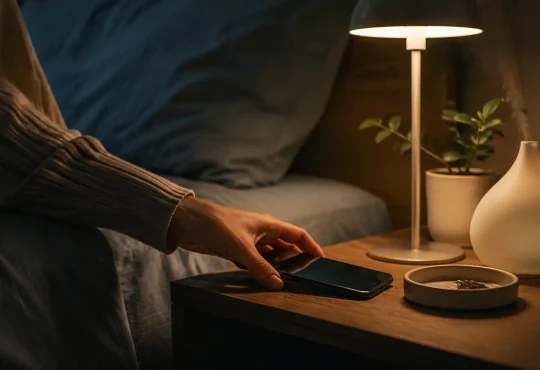
Small, low-pressure changes tend to compound in ways that dramatic sleep overhauls don’t. Moving your phone charger across the room. Dimming lights an hour before you intend to sleep. Eating dinner slightly earlier. None of these require willpower in the way that “go to bed at 10 p.m. starting tonight” requires willpower. They change the environment rather than demanding that you override your own impulses through sheer force.
Redefining What a “Sleep Win” Looks Like
Part of the guilt problem is definitional. If a good night is eight hours, in bed by ten, asleep within fifteen minutes, uninterrupted until morning most people are going to fail most of the time, and feel bad about it constantly.
What if a sleep win was just: you got more rest tonight than last night. You went to bed before midnight twice this week. You noticed you were tired at nine and actually considered doing something about it. You spent twenty minutes reading instead of scrolling and found it easier to wind down.
Progress in sleep, like most biological processes, is rarely linear. It doesn’t respond well to rigid targets and self-punishment when you miss them. It responds to consistency, to low-stakes iteration, to the kind of patient experimentation you’d extend to a problem you were genuinely curious about rather than ashamed of.
The goal isn’t to become a person who never struggles with sleep. The goal is to stop making the struggle harder by treating it as proof of something broken in you. Your habits aren’t your verdict. They’re just where you’re starting from.