

The Clock Inside You Has Its Own Opinion
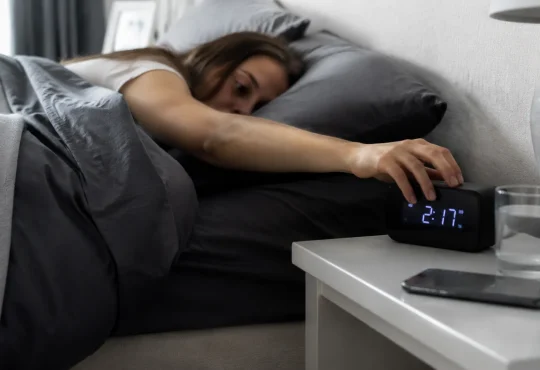
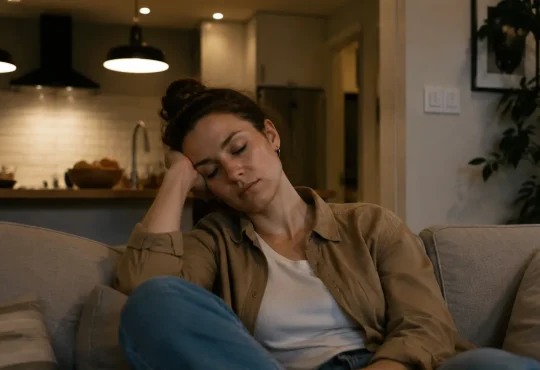
You’ve done everything right. You went to bed at a reasonable hour. You got seven, maybe eight hours of sleep. You woke up to your alarm, drank your coffee, and still by 10 in the morning, you’re fighting the urge to put your head down on the desk. Then comes midnight, and something shifts. Your mind sharpens. Ideas start flowing. You feel more alert than you have all day.
This isn’t laziness. It’s not a character flaw or a sign that you need more willpower. It’s biology doing exactly what it was designed to do just not in sync with the schedule modern life expects you to keep.
Circadian Rhythm and the Two-Process Model of Sleep
Your body runs on an internal clock called the circadian rhythm, a roughly 24-hour biological cycle that governs hormone release, body temperature, metabolism, and critically your alertness levels. This clock doesn’t care that your workday starts at 9 AM. It operates on its own timing, driven primarily by light exposure and genetics.
Layered on top of this is what sleep scientists call the two-process model. Process S is sleep pressure: the longer you’ve been awake, the more adenosine a sleep-inducing chemical accumulates in your brain. Process C is your circadian drive for wakefulness, the internal signal that pushes back against that pressure at certain hours of the day. When these two forces are out of phase with each other, you end up with that maddening combination of exhaustion in the morning and alertness at night.
At 10 AM, if your circadian rhythm is still in its biological “night,” your body hasn’t yet ramped up its alertness signals. Meanwhile, Process S has already been building since you woke up. The result is a perfect storm of grogginess. Fast forward to 10 PM your sleep pressure should theoretically be peaking but if your circadian clock is wired to reach its natural alertness peak late in the evening, it can override that pressure entirely.
Chronotype: You’re Not Just a Night Owl by Habit
Here’s the part most people miss. Your chronotype whether you’re a morning person, an evening person, or somewhere in between is largely genetic. Research published in Nature Communications identified over 350 genetic variants associated with sleep timing. This means your 10 PM second wind isn’t just a habit you developed from binge-watching shows too late. For a significant portion of the population, it’s a trait baked into their DNA.
The scientific term for the extreme late-night end of the spectrum is Delayed Sleep Phase Syndrome, or DSPS. People with DSPS don’t just prefer late nights their entire circadian rhythm is literally shifted several hours later than the conventional social clock. When they try to wake up at 7 AM for work, they’re essentially doing the equivalent of asking a natural morning person to function at 3 AM. The suffering is real, even if it’s invisible to everyone around them.
But you don’t need a clinical diagnosis to feel the gap. Surveys suggest that somewhere between 20 and 30 percent of the adult population leans toward evening chronotypes, making them perpetually misaligned with a 9-to-5 world built by and for larks.
Cortisol, Light, and the Morning That Never Quite Arrives
In a healthy morning chronotype, cortisol often called the stress hormone, though that framing undersells it spikes sharply within the first 30 to 45 minutes after waking. This is called the cortisol awakening response, and it’s essentially your body hitting the ignition switch. It sharpens focus, mobilizes energy, and signals every system in your body that the day has begun.
In evening types, this cortisol spike can be blunted, delayed, or simply timed to occur later in the morning. If you’re someone whose peak cortisol hits at noon rather than 7 AM, your10 o’clock self is running on a system that hasn’t fully booted yet. No amount of coffee fully compensates for this caffeine blocks adenosine receptors to reduce the feeling of tiredness, but it doesn’t replicate the hormonal cascade that actually wakes your brain up.
Light exposure complicates this further. Artificial light at night screens, overhead lighting, the ambient glow of a city suppresses melatonin production and keeps the brain in an activated state. If you’ve spent years living in environments saturated with evening light, you may have gradually pushed your circadian clock even later than your genetics intended. The line between biology and behavior isn’t always clean.
Social Jetlag and the Hidden Cost of Misalignment
There’s a term worth knowing: social jetlag. It was coined by chronobiologist Till Roenneberg to describe the chronic misalignment between your biological clock and the social clock you’re forced to follow. It plays out every Monday morning when the weekend’s late nights collide with the weekday alarm. But for evening types, every morning is Monday.
The consequences go beyond feeling groggy. Research has linked chronic circadian misalignment to increased risk of metabolic disorders, depression, cardiovascular issues, and impaired cognitive function. When your body is perpetually operating out of phase eating when it’s not primed for digestion, sleeping when it’s not ready, performing mental tasks when it’s biologically at low tide everything runs less efficiently. The tiredness at 10 AM isn’t just inconvenient. Over years, it can accumulate into something more serious.
Working With Your Clock Instead of Against It
The most practical insight from all of this isn’t a hack or a supplement recommendation. It’s a shift in perspective. If your peak cognitive hours fall between 7 PM and 1 AM, scheduling your most demanding, creative, or intellectually intensive work for that window when you have the flexibility to do so isn’t laziness. It’s optimization.
Some workplaces and educational institutions are beginning to take chronobiology seriously. Studies on school start times have shown that pushing high school start times later by even30 to 60 minutes produces measurable improvements in student performance, mood, and health. A few forward-thinking companies have experimented with flexible scheduling that allows employees to work within their natural alertness windows. The productivity gains, when they’ve been tracked, tend to be real.
For those without that flexibility, the strategies are less dramatic but still meaningful. Consistent wake times even on weekends help anchor the circadian clock. Morning light exposure, ideally within 30 minutes of waking, can help advance a delayed clock over time by suppressing melatonin and triggering that cortisol response earlier. Reducing bright light exposure in the two hours before your intended sleep time gives melatonin the signal to rise on schedule.
None of this will turn a committed night owl into someone who springs out of bed at 6 AM feeling magnificent. Some chronotypes are simply incompatible with early rising in any sustainable way, and no amount of discipline will fully override that. But the middle ground reducing the severity of misalignment, protecting sleep quality, and aligning demanding tasks with natural energy peaks is genuinely achievable for most people.
The Real Question Behind the Exhaustion
There’s something almost culturally loaded about the tiredness at 10 AM. Society tends to read it as failure a lack of discipline, an indulgence in late nights, a person who just doesn’t have their life together. The early riser has been mythologized for centuries as the virtuous archetype. Benjamin Franklin had opinions about this. So did every productivity guru who ever wrote a book.
What the science suggests, quietly but firmly, is that this moral framing is wrong. The person who cannot wake up alert at 7 AM is not failing a character test. They are experiencing a biological reality one that is measurable, partially heritable, and influenced by an environment we’ve built in ways that systematically disadvantage certain sleep types.
Your 10 PM clarity isn’t a problem to be cured. It’s information about who you are, when your brain actually works, and what your body needs. The more useful question isn’t how to force yourself to feel alert at 10 AM, but whether the life you’re building leaves any room for how you actually function.