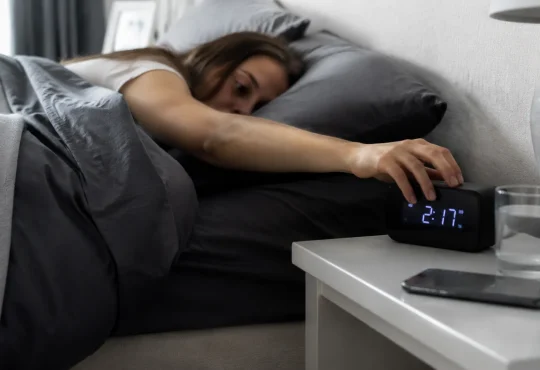


There’s a particular kind of exhaustion that goes beyond yawning. It settles into your bones somewhere around week three, and by month two, you stop recognizing it as tiredness at all. It just becomes the baseline. You’re irritable in ways you can’t explain, your hands tremble slightly when you reach for your coffee, and a loud noise in a quiet room makes your heart lurch like you’ve been ambushed. Most people chalk this up to “stress.” But what’s actually happening runs far deeper than that it’s your nervous system, quietly unraveling.
The Nervous System Was Never Built for This
The human autonomic nervous system operates on a rhythm that evolved over millions of years. Its two primary branches the sympathetic, which governs your fight-or-flight response, and the parasympathetic, which handles rest and recovery are meant to trade shifts. The sympathetic branch handles urgency; the parasympathetic restores. Sleep is, above everything else, the transition point between the two. It is the biological handoff where the body drops its guard and lets the repair crew in.
When you cut that handoff short night after night, the two systems don’t just fall out of balance. They start to work against each other. Your sympathetic nervous system, already primed for threat-detection, begins operating without a proper off-switch. Cortisol, which should taper off as the night deepens, stays elevated. Adrenaline, meant to spike briefly in emergencies, becomes a low-grade constant. The body starts treating ordinary Tuesday mornings like they might end badly.
What Months of Sleep Deprivation Actually Does to Your Brain Stem
Most sleep research focuses on the cortex memory, cognition, emotional regulation. That’s legitimate territory. But the more unsettling changes happen lower, in the brain stem and the hypothalamus, structures so ancient and so fundamental that their disruption touches virtually every system in the body.
The locus coeruleus, a small cluster of neurons in the brain stem, is your nervous system’s primary norepinephrine factory. It’s deeply involved in arousal, attention, and the physiological stress response. Under normal conditions, it quiets significantly during sleep, allowing itself to essentially recover and recalibrate. After months of poor sleep, this reset no longer happens fully. The locus coeruleus becomes chronically overactivated and overactivated norepinephrine circuitry looks a great deal like anxiety disorder. Not metaphorically. Neurologically.
This is why people who’ve struggled through months of insomnia often describe a creeping sense of dread that doesn’t attach to anything specific. It’s not worry about a particular problem. It’s a nervous system that has been running in threat-detection mode long enough that threat-detection has become its default setting.
The Vagus Nerve and the Slow Erosion of Calm
The vagus nerve is the longest cranial nerve in the body, running from the brain stem through the chest and into the abdomen. It is the anatomical backbone of the parasympathetic system the biological wire through which calm travels. When it’s functioning well, vagal tone keeps heart rate variable, digestion smooth, and the inflammatory response in check. High vagal tone is associated with emotional resilience, the ability to recover quickly from stress without ruminating.
Sleep is one of the primary drivers of vagal tone. The slow, deep breathing that characterizes good sleep directly stimulates the vagus nerve, reinforcing parasympathetic dominance throughout the night. When sleep becomes fragmented or insufficient, vagal tone drops. The parasympathetic system loses its grip.
What this looks like in practice is subtle but pervasive. Your heart rate variability decreases meaning your cardiovascular system becomes less adaptive, less able to modulate between calm and alert. Your gut, which communicates directly with the brain through the vagus nerve, starts sending distress signals. Digestion becomes unreliable. Appetite regulation breaks down. Some people overeat; others lose interest in food entirely. Neither response is a character flaw. Both are the vagus nerve, operating under duress.
When Your Body Can No Longer Tell Threat from Safety
There’s a concept in neuroscience called interoception the brain’s ability to accurately read signals from inside the body. It’s how you know you’re hungry before you’ve consciously thought about food, how you sense your heart rate rising before you’ve registered fear as an emotion. Interoception is, fundamentally, the nervous system’s self-awareness.
Months of sleep deprivation degrades interoceptive accuracy. The anterior insula, the region most responsible for this internal body-reading, becomes less reliable. The result is that your threat-detection system already dysregulated from sympathetic overdrive is now also working with bad data. Physical sensations that are benign get misread as dangerous. A tight chest becomes a cardiac event. A headache becomes something worse. The nervous system, deprived of its nightly calibration window, starts confusing noise for signal.
This is the neurological underpinning of health anxiety in people who’ve gone through extended sleep deprivation. It’s not hypochondria in the dismissive sense. It’s a sensing system that has been running on corrupted input long enough to stop trusting itself.
The Inflammation Loop Nobody Talks About
Sleep is the body’s primary anti-inflammatory window. During deep slow-wave sleep, the glymphatic system the brain’s waste-clearance network flushes metabolic byproducts including beta-amyloid and tau proteins, the same proteins associated with neurodegeneration. Pro-inflammatory cytokines, which rise naturally during waking hours, get downregulated during sleep. The immune system calibrates.
Interrupt this cycle for weeks and months and inflammatory markers begin to climb. IL-6, TNF-alpha, C-reactive protein these aren’t abstractions. Elevated levels of these compounds alter the way neurons communicate. They cross the blood-brain barrier and sensitize the very neural circuits responsible for pain perception and threat-response. This creates a feedback loop that becomes self-reinforcing: elevated neuroinflammation worsens sleep quality, and worsened sleep quality drives more neuroinflammation.
What this means, physically, is that the body starts toache in diffuse, hard-to-locate ways. Sensitivity to sound, light, and temperature increases. The threshold between manageable discomfort and genuine pain shifts downward. And because the nervous system is now both inflamed and dysregulated, any additional stressor a difficult conversation, a minor fender bender, an unexpected bill lands with disproportionate force.
The Part That Takes Longest to Come Back
Recovery is possible. The nervous system retains plasticity, and with sustained, quality sleep over weeks and months, many of these dysregulations do reverse. Vagal tone can improve. Interoceptive accuracy can be recalibrated. The locus coeruleus can quiet down.
But the inflammatory damage, particularly in the hypothalamic-pituitary-adrenal axis the cortisol regulation system is slower to normalize. The HPA axis, when chronically stressed, undergoes structural changes. The hippocampus, which is both crucial for memory and one of the primary brakes on cortisol response, is acutely vulnerable to glucocorticoid damage. Months of sleep deprivation effectively floods the hippocampus with cortisol over and over until some of those dampening circuits begin to wear thin.
This is why people who’ve come through a prolonged period of poor sleep often describe feeling “better but not quite right” even after sleep has improved. The sleep debt itself clears faster than the neural architecture it stressed. The wiring takes longer to settle.
There’s no comfortable conclusion to draw from any of this. The nervous system is not infinitely resilient. It can absorb a lot, and it will try quietly, without complaint, in the background of every demanding day. But it keeps a ledger. And months of sleepless nights fill that ledger faster than most people realize, until the cost shows up somewhere they weren’t expecting it.