
The Invisible Race Nobody Signed You Up For
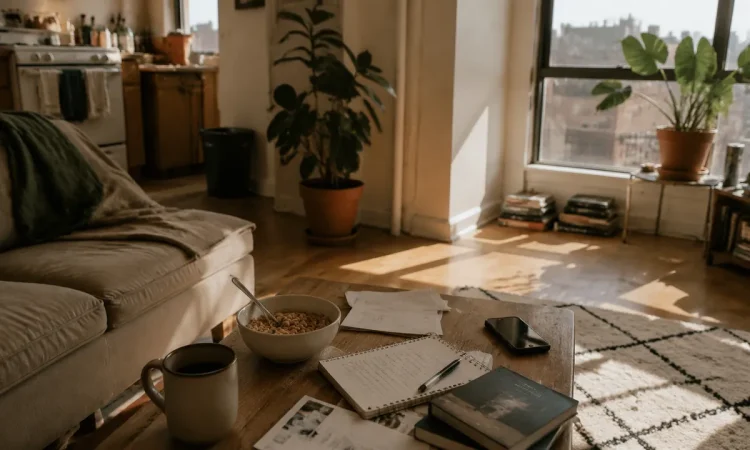
There’s a moment most people recognize but rarely talk about that creeping unease when you check in on an old classmate’s LinkedIn profile and find a VP title, a second home, and a quote about “grateful hearts” over a photo of them holding a newborn. Nothing has happened to you. You’re sitting in the same apartment, maybe eating cereal at 2pm on a Tuesday. And yet something tightens in the chest, a low hum of falling behind behind what, exactly, remains maddeningly unclear.
This is the machinery of the modern pace. It doesn’t announce itself. It simply runs, underneath the surface of every birthday and reunion and scroll, setting a tempo you never agreed to but somehow feel obligated to match.
The cruelest part isn’t that the race is difficult. It’s that it’s invisible. Nobody handed you a rulebook. Nobody told you that by27you should have this, or by 33 you should feel that. The milestones just materialize, absorbed from cultural osmosis sitcoms, parental expectations, Instagram grids, the offhand comments of well-meaning relatives. Before you’ve thought critically about any of it, the timeline is already written. Your only job, it seems, is to catch up.
Why Speed Became a Virtue
Somewhere in the past century, busyness became its own reward. Not productivity, not depth speed. The person who hustles hardest, sleeps least, and scales fastest earns the most social approval. “What do you do?” stopped being small talk. It became a status probe, a way of triangulating your worth in real time.
This isn’t ancient. The glorification of velocity is fairly new. Agricultural societies organized time around seasons. The body set its own rhythms. You worked until the work was done; rest wasn’t laziness, it was restoration. Industrial capitalism changed that calculus decisively. Time became money, literally. And once time had a dollar value, any hour not converted into output started feeling like waste.
The digital era turbocharged this. Now optimization isn’t just for factories it’s for bodies, relationships, side hustles, morning routines, grief, even joy. There are productivity frameworks for your weekends. Biohacking protocols for your sleep. Personal branding strategies for your authentic self. The implication, always, is that your current pace is insufficient. That you could be going faster. That something is being left on the table.
Living slowly, in this environment, is not passive. It’s a refusal.
The Cost Nobody Calculates
Ask someone who has burned out seriously not the performative burnout you post about, but the real kind, where you can’t read a paragraph, can’t hold a conversation without your mind going blank, can’t remember what you used to care about and they’ll often say the same thing. They’ll say they knew, somewhere along the way. There were signals. Mornings when getting up felt like lifting stone. Evenings when nothing brought relief. But the script said push through, and so they did, because stopping looked too much like losing.
The cost isn’t only personal. There’s an entire relational ecosystem that suffers when people can’t slow down. Friendships that go unmaintained for years, not because anyone stopped caring but because depth requires time and nobody has any. Children raised by parents who are physically present but mentally still in the last Slack thread. Creative work that never happens because there’s always something more urgent eating the hours first.
Speed exacts a specific tax on the inner life. The slower processes synthesis, wonder, integration, grief, genuine connection they all require duration. You can’t rush insight. You can’t sprint your way to knowing what you actually want. But the modern pace doesn’t price these in. It only measures what can be measured: output, growth rate, visible achievement. Everything else gets filed under optional.
What It Actually Looks Like to Opt Out
Here’s where it gets complicated, because “live at your own pace” can sound like a lifestyle brand. A linen-clothing aesthetic. Morning walks and journaling and the kind of slow mornings that are, suspiciously, very photogenic.
That’s not what this is.
Living at your own pace is usually unglamorous. It means sitting with the discomfort of watching people move faster and telling yourself it’s not a competition and really meaning it, not just performing the belief. It means making choices that don’t make immediate sense on paper: taking the less prestigious job because you actually like the work, staying in a city that doesn’t have the right status code but where your roots run deep, choosing rest before the crash rather than after. It means tolerating the judgment of people who interpret your pace as a lack of ambition.
It also means internal negotiation that never fully ends. There’s no arriving at a place where the noise goes quiet permanently. The cultural current is too strong for that. Living at your own pace is less a destination and more a recurring practice, a daily decision to orient toward your own signal rather than the ambient one.
Some people find it through necessity illness, failure, loss, the forced stop of circumstances they didn’t choose. Others find it through a slower, deliberate reexamination. Either way, the recognition tends to be the same: that the speed they were keeping wasn’t theirs. It belonged to something outside them that had never, actually, asked their permission.
The Deeper Question Underneath All of It
The reason “live at your own pace” lands differently than ordinary self-help advice or should, anyway is that it isn’t really about pace. Pace is the surface. Underneath it is a question about authorship. Whose life is this? Who gets to decide what counts as a meaningful use of a Tuesday afternoon, or a decade, or a life?
These aren’t comfortable questions. The comfortable move is to keep running, because running doesn’t require you to answer them. Busyness is the original avoidance strategy. As long as you’re moving fast enough, you never have to stop and confront whether the direction is right.
The quiet rebellion isn’t quiet because it’s timid. It’s quiet because it happens largely in the interior. It doesn’t make headlines. There’s no manifesto, no unified movement, no satisfying moment of public defiance. It’s the person who lets the phone go dark for an evening because something in them needs silence. The thirty-year-old who decides not to take the promotion and genuinely doesn’t need you to understand why. The couple who stays in the small house on purpose, who finds that enough can actually feel like enough.
What these people have in common isn’t ideology. It’s a practiced willingness to feel the dissonance the gap between what the culture says should satisfy you and what actually does and to keep moving toward the real thing, even when it’s harder to explain.
The race keeps running. The metrics keep scrolling. And somewhere in the middle of it, some people are quietly, stubbornly, learning to hear their own tempo again.