
Your Wardrobe Doesn’t Need a Trend Reset. It Needs a Pause.
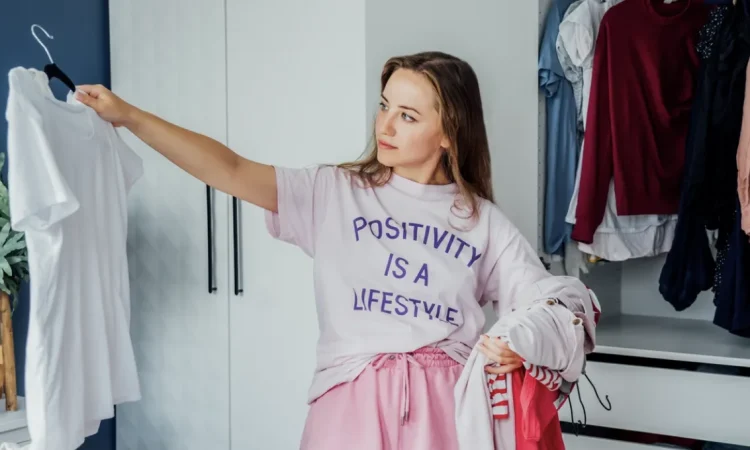
There’s a ritual most of us know well. You open your closet, stare at a rack full of clothes, and somehow feel like you have nothing to wear. So you do what the culture has trained you to do: you go shopping. Maybe you scroll through a few “must-have fall pieces” roundups. Maybe you clear out three garbage bags of old stuff first, call it a refresh, and fill the space back up within two weeks. The closet feels new for about a weekend. Then the exact same feeling returns.
This isn’t a taste problem. It’s not even really a wardrobe problem. It’s a pacing problem and no trend reset can fix it.
The Fashion Cycle Is Designed to Keep You Moving
The modern fashion industry operates on manufactured urgency. Micro-trends have compressed what used to be seasonal cycles into something closer to weekly news cycles. TikTok’s “mob wife aesthetic” gives way to “quiet luxury” gives way to “coastal grandmother” all within a span of months. Each wave arrives carrying the implicit message that what you currently own is slightly off, slightly past, slightly not-quite-right.
This is intentional. The business model depends on your dissatisfaction. Not deep dissatisfaction just a low, persistent hum of it. Enough to make you click “add to cart” but not enough to make you question the whole system. The trend reset is the industry’s preferred solution because it keeps you engaged with the cycle rather than stepping outside of it.
A pause does the opposite. It removes you from the conveyor belt long enough to remember that you had opinions before the algorithm started forming them for you.
What a Pause Actually Looks Like
This isn’t about a shopping ban, though some people find that useful. A pause is more internal than that. It’s the act of stopping the incoming information unfollowing the “outfit inspo” accounts, skipping the haul videos, letting a few trend cycles pass without consuming them and sitting with what you already have long enough to actually see it.
Most people have never done this. They’ve reorganized their wardrobe, sure. They’ve Marie Kondo’d their way through it, holding each item and performing the feeling of joy. But they haven’t simply worn what they own, repeatedly and without guilt, long enough to understand what their actual preferences are outside of what they’ve been recently shown.
When you wear the same ten pieces on rotation for a month, something interesting happens. You start to notice what you reach for without thinking. You notice the things you keep skipping even when they’re technically “your style.” You notice the gap between the person you dress for on aspirational days and the person you actually are on an average Tuesday.
That information is worth more than any style guide.
The Aspirational Wardrobe Trap
Here’s where a lot of closets quietly fail their owners. A significant portion of most people’s wardrobes isn’t really for them it’s for a version of them. The blazer bought for the confident, put-together professional persona. The vintage band tee for the effortlessly cool, slightly nostalgic persona. The linen wide-leg trousers for the slow-living, farmers-market persona.
None of these are bad items. The problem is when they collectively constitute a costume collection for lives you’re not actually living, rather than a practical toolkit for the life you are.
A pause makes this visible in a way a trend reset never will. A reset just swaps one aspirational wardrobe for another this season’s version of who you could theoretically be. The pause asks you to reconcile the fantasy with the reality. Not to abandon all aspiration, but to be honest about which pieces are genuinely yours and which ones are just very convincing possibilities you bought during a hopeful moment.
Style as Memory, Not Trend
There’s another dimension to this worth sitting with. Clothing holds time in a way that’s different from almost any other object. The worn-in denim jacket you’ve had for eight years carries something that no new purchase can replicate a record of actual living. The dress you wore to your best friend’s wedding. The sweater you bought in a small shop in a city you loved. These pieces have a weight to them that has nothing to do with their resale value or whether they’re currently trending.
When we’re caught inside the reset cycle, we tend to churn through this kind of meaningful inventory without even noticing. Things get donated in bulk because they “don’t fit the aesthetic anymore.” The aesthetic, of course, being one we adopted six months ago based on a handful of images that no longer feel relevant.
A pause lets you grieve this a little, if you need to. And it lets you stop before you do it again. It allows you to ask: what would I genuinely miss if this was gone? That question cuts through a lot of noise.
Dressing From the Inside Out
The practical result of all this isn’t necessarily a smaller wardrobe or a more expensive one or even a more cohesive one, though any of those might follow. The result is that you start to develop a genuine point of view something that persists across trend cycles rather than being swept along by them.
People often look at someone with strong personal style and assume it comes from access: to money, to fashion knowledge, to the right vintage stores. Sometimes that’s true. But more often, it comes from a kind of settled relationship with their own preferences. They know what they like because they’ve spent time with themselves. They’re not chasing the next version of their wardrobe because they’re not that troubled by the current one.
That settledness isn’t a personality trait you either have or don’t. It’s something you can arrive at, deliberately, by doing the unglamorous thing of simply pausing. Not optimizing. Not resetting. Just stopping, looking, and letting what’s actually there become clear.
The clothes you already own are waiting to tell you something. The question is whether you’re moving too fast to hear it.