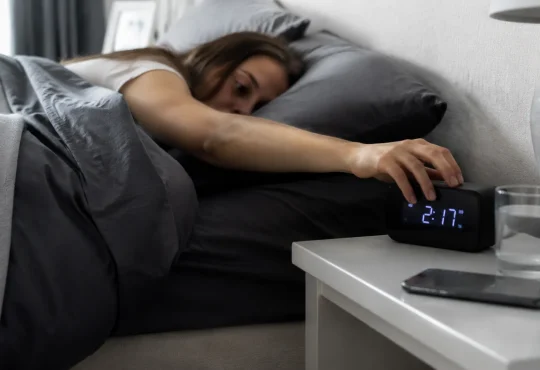

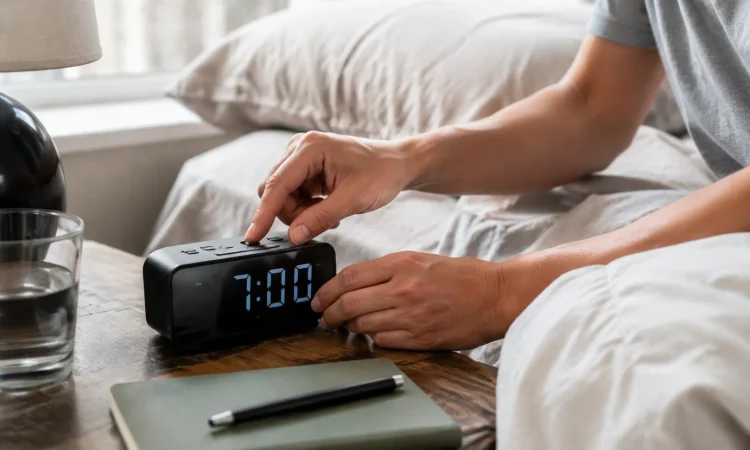
The Problem Isn’t Laziness It’s Timing
Most people who struggle with a broken sleep schedule assume something is wrong with them. They go to bed at3 a.m. and wake up at noon, or they crash at 9 p.m. only to stare at the ceiling at 2 a.m. wondering if they’ll ever feel normal again. The instinct is to blame discipline, willpower, or stress. But the real culprit is almost always your circadian rhythm the internal 24-hour biological clock that governs when your body expects to sleep, wake, eat, and even think clearly.
The circadian clock is not a metaphor. It’s a physical system driven by a cluster of neurons in your hypothalamus called the suprachiasmatic nucleus, and it synchronizes itself primarily to light. When that system falls out of alignment with your daily life whether from jet lag, shift work, late-night screen time, or just a week of staying up too late sleep becomes unpredictable and restorative rest feels impossible.
The good news is this: your circadian rhythm is remarkably responsive to the right inputs. You don’t need a sleep clinic or a prescription. What you need is a strategy that works with your biology rather than against it, applied consistently for five to seven days.
Day One: Stop Trying to Force Sleep Anchor Your Wake Time Instead
The biggest mistake people make when trying to fix their sleep is focusing almost entirely on bedtime. They set an aggressive target say, 10:30 p.m. lie in bed for two hours, fail to fall asleep, and feel worse than before. Sleep doesn’t respond well to brute force. Bedtime, counterintuitively, is the wrong lever to pull first.
The anchor point that actually resets your clock is your wake time.
Pick a single wake-up time and commit to it regardless of when you fall asleep. Not roughly precisely. If you choose 7 a.m., that means7 a.m. on the first day even if you didn’t fall asleep until 4. This sounds brutal, and for the first day it is. But this one act begins the process of resetting your sleep pressure the biochemical drive that accumulates the longer you stay awake and eventually forces your body into sleep.
The science here involves adenosine, a chemical that builds up in the brain during waking hours and gets cleared out during sleep. When you cut your sleep short by waking at a fixed time, adenosine builds faster the next day, making it genuinely easier to fall asleep at the target hour. You’re essentially borrowing against tomorrow’s tiredness to repay the debt tonight.
Light Is the Remote Control for Your Body Clock
Once you’re up, your most powerful tool in those first thirty minutes isn’t coffee it’s daylight. Sunlight hitting your retinas signals the suprachiasmatic nucleus to halt melatonin production and begin the16-hour countdown to your next sleep window. Skip this step and you’re leaving the most effective reset mechanism sitting unused.
Get outside within twenty minutes of waking. Even overcast daylight delivers ten times the lux intensity of indoor lighting. If your schedule makes outdoor exposure impossible, a light therapy lamp rated at 10,000 lux used for twenty to thirty minutes is a clinically validated substitute.
The flip side of this equation matters just as much. In the two hours before your target bedtime, your environment needs to go dim. Blue-spectrum light from phones, laptops, and overhead LEDs suppresses melatonin the hormone that cues your body that darkness has arrived and sleep is appropriate. This isn’t alarmism; it’s measurable physiology. Switching to warm-toned lighting, using blue-light filters, or simply putting screens away entirely during this window accelerates the onset of genuine drowsiness.
Think of it as working both ends: bright morning light pushes the clock earlier, dim evening light removes the brakes on sleep.
Temperature, Eating Windows, and the Body’s Hidden Cues
Light gets most of the attention in sleep science, but your circadian rhythm also reads temperature and meal timing as signals. Core body temperature needs to drop roughly one to two degrees Fahrenheit for sleep to initiate. This is why people naturally sleep better in cool rooms and why a warm shower before bed actually helps it draws blood to the surface, accelerating heat loss from the core afterward.
Keep your bedroom between 65 and 68°F if possible. If that’s not realistic, even lighter bedding or a fan can approximate the effect.
Meal timing is an underappreciated lever. Your digestive system has its own peripheral clock, and eating at irregular hours sends conflicting signals that make circadian alignment harder. During your reset week, try to eat your first meal within an hour of waking and avoid eating within two to three hours of your target bedtime. Late-night eating signals your metabolism to stay active which is almost exactly the opposite of what you want.
Caffeine deserves its own note. Most people know it’s a stimulant, but fewer understand that its half-life in the body is five to seven hours. A coffee at 3 p.m. means roughly half of that caffeine is still circulating at 9 p.m. During your reset week, cut off all caffeine by noon. It feels like a significant sacrifice, but the payoff in actual sleep quality by days three and four is noticeable.
Why the Middle Days Feel the Worst and What to Do About Them
Days two and three of a sleep reset are typically the hardest. You’re running a mild sleep deficit from the enforced early wake times, and your body hasn’t fully shifted its rhythms yet. This is the window where most people abandon the plan, either by sleeping in “just once” or collapsing for a three-hour nap in the afternoon.
Napping during this phase is a trap. Sleep pressure is your most valuable currency it’s what will finally pull you into sleep at the target hour tonight. A long nap spends that currency prematurely, and you’ll be lying awake again at midnight wondering what went wrong.
If the fatigue is genuinely unmanageable, a short nap twenty minutes maximum, before2 p.m. won’t devastate your sleep pressure the way a ninety-minute crash will. Set an alarm, keep it brief, and treat it as a last resort rather than a default.
Physical movement during these middle days helps considerably. Even a thirty-minute walk in the afternoon raises core temperature slightly, improves mood through endorphin release, and contributes to deeper slow-wave sleep that night. You don’t need a gym session consistent, moderate activity timed in the afternoon works better than intense morning exercise for sleep purposes.
What “Fixed” Actually Feels Like by Day Five
By the fourth or fifth day of consistent wake times, morning light exposure, and managed evening habits, most people notice a shift that feels almost sudden. Sleep onset drops from an hour of restless waiting to fifteen or twenty minutes. Morning waking happens naturally, sometimes even just before the alarm. The groggy, dragging-through-cement feeling of the first two days gives way to something closer to real alertness.
This isn’t placebo. It reflects genuine circadian entrainment your biological clock has locked onto the new schedule and is now actively preparing your body for sleep and waking at the expected times. Melatonin starts rising earlier in the evening. Cortisol peaks cleanly at the new wake time. Sleep architecture improves, meaning you cycle through deeper stages of slow-wave and REM sleep rather than fragmented shallow rest.
The key insight people often miss after a successful reset is maintenance. Your circadian rhythm is stable but not fixed it drifts back toward chaos quickly if you abandon anchor wake times on weekends or return to late-night screen habits. Sleeping in by more than an hour on weekends is enough to begin “social jet lag,” a term researchers use for the circadian misalignment caused by weekend schedule inconsistency.
A repaired sleep schedule is not a one-time achievement. It’s a system you run continuously, and the cost of running it correctly is surprisingly low once the initial reset is complete. Wake at the same time. Get morning light. Dim the evenings. Keep your room cool. These are not elaborate interventions they are small, daily decisions that compound into consistent, restorative sleep.
And that, after a week of genuine effort, is entirely within reach.