
The Cruel Paradox Nobody Talks About Honestly
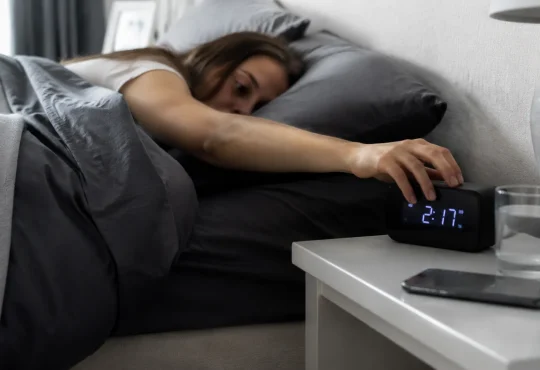
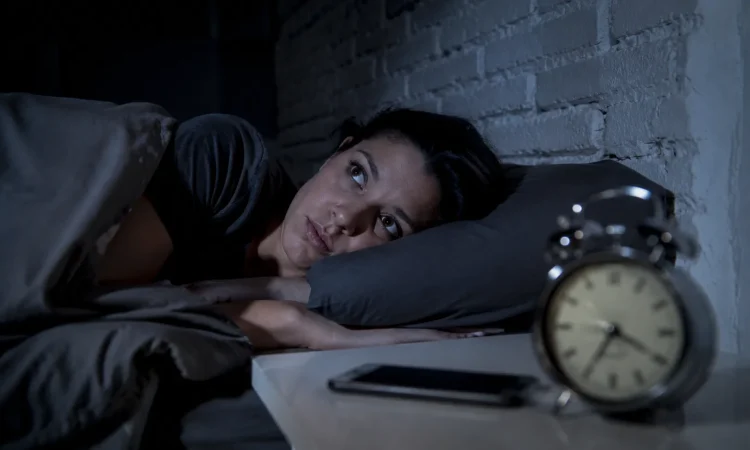
You’re running on fumes. Your eyes are dry, your limbs feel like they’re wrapped in wet concrete, and you’ve been yawning since 9 PM. By all physical measures, your body is begging for shutdown. And yet the moment your head hits the pillow, something shifts. The mind suddenly has opinions. It wants to replay that awkward thing you said three years ago, rehearse tomorrow’s meeting, or simply spin in place for no particular reason at all. Sleep the thing you’ve been craving all day becomes the one thing your brain flatly refuses to deliver.
This isn’t laziness or weakness. It’s not a character flaw, and it’s certainly not as simple as “just relax.” What’s actually happening inside you when exhaustion and wakefulness collide is a story about biology, psychology, and modern life all pulling in different directions at once.
Your Body and Brain Are Not on the Same Team
Most people assume sleep is one unified system when you’re tired, you sleep. The reality is messier. The human body operates on what researchers call two distinct but interacting processes: sleep pressure and circadian rhythm.
Sleep pressure is the physical accumulation of adenosine, a chemical byproduct that builds in your brain the longer you stay awake. Think of it as a debt counter ticking upward every hour. The more adenosine piles up, the heavier and more sluggish you feel. That bone-deep fatigue you experience by late evening? That’s adenosine talking.
Circadian rhythm, on the other hand, is your internal clock a roughly 24-hour biological cycle governed primarily by light exposure. It regulates not just sleepiness but body temperature, hormone release, metabolism, and dozens of other functions. Under ideal conditions, these two systems harmonize: adenosine peaks just as your circadian clock dips toward its nighttime phase, and you drift off easily.
But the brain specifically the arousal systems running through structures like the locus coeruleus, the hypothalamus, and the prefrontal cortex can override both. Stress hormones, particularly cortisol and adrenaline, act as biological alarm systems. They evolved to keep you alert during genuine threats. The problem is that the brain doesn’t distinguish well between a predator in the grass and a deadline at work. Both trigger the same cascading chemical response. Both keep you wired.
When Cortisol Doesn’t Know When to Quit
Under normal circumstances, cortisol follows a clean arc. It peaks sharply in the early morning, pulling you into wakefulness, and gradually tapers through the day, reaching its lowest point in the late evening to allow sleep onset. That arc is elegant when it works.
In chronically stressed individuals and that covers an enormous slice of the modern population the arc gets distorted. Cortisol levels remain elevated past midnight. The nervous system stays in a low-grade state of readiness, perpetually scanning for problems. You feel exhausted because the body has been working hard all day, but the brain’s threat-detection machinery hasn’t received the all-clear signal yet. So it keeps the lights on.
This is why so many people report that the moment they lie down is when their thoughts become loudest. In the daytime, there’s enough distraction work tasks, noise, social interaction to mask the background hum of anxiety. At night, stripped of those buffers, the mental noise suddenly has the whole room.
Screens, Light, and the Melatonin Problem
There’s another layer here that compounds everything, and it lives in your hand for most of the evening. Blue light the wavelength emitted by phones, laptops, and LED televisions is registered by specialized cells in the retina called intrinsically photosensitive retinal ganglion cells. These cells feed directly into the suprachiasmatic nucleus, the brain’s master circadian clock.
When blue light hits those cells after dark, the suprachiasmatic nucleus interprets it as daylight and suppresses melatonin production. Melatonin isn’t a sleeping pill, exactly it’s more of a biological dusk signal, telling the body that night has arrived and preparation for sleep should begin. Without it, or with it arriving late, the whole cascade of sleep-onset physiology gets pushed back.
What this means practically is that a person scrolling their phone at 11 PM is essentially telling their brain it’s still mid-afternoon. You can feel physically exhausted and neurologically convinced it’s too early to sleep simultaneously, without contradiction.
The Identity Layer: Why the Mind Refuses to Let Go
Biology explains a lot. But there’s a dimension to this phenomenon that purely physiological accounts tend to underserve.
For many people, the late night hours represent the only unstructured time they have. The children are asleep. Work has technically ended. The obligations that define daylight hours have temporarily retreated. Psychologists sometimes call this “revenge bedtime procrastination” the unconscious decision to stay awake simply to reclaim a sense of personal time and agency that the day never offered.
It’s not rebellion in any calculated sense. It’s more like the psyche noticing a window and quietly refusing to close it. The person isn’t being irrational. They’re responding to a real deprivation: a life so densely scheduled and externally directed that the only moment of autonomy arrives when they should already be unconscious.
This dynamic is especially common among people who feel that their daytime hours belong almost entirely to others caregivers, employees working high-demand jobs, parents of young children. The brain learns, over time, to associate nighttime with freedom. And freedom, even when you’re running on empty, is hard to surrender.
Hyperarousal and the Resting Brain That Won’t Rest
Research into chronic insomnia has increasingly pointed to a state called hyperarousal a baseline elevation in brain activity that persists even during attempts to sleep. Brain imaging studies have shown that people with insomnia tend to have higher metabolic rates in the frontal and parietal cortices at night than good sleepers do. Parts of the brain associated with self-monitoring, rumination, and emotional processing remain unusually active.
In this state, the body may achieve some degree of physical rest, but the mind never fully descends into the deeper stages of sleep where restoration actually happens. You wake feeling like you barely slept, even if a clock would tell you otherwise. The quantity was there; the quality wasn’t.
This is also why the classic advice to “just stop thinking” is not only unhelpful but can actively worsen things. Attempting to suppress thought creates a monitoring loop part of your mind starts watching to see if the other part has stopped thinking yet which only sustains the arousal you’re trying to exit. The effort itself is the problem.
Finding the Off-Ramp
None of this means the situation is hopeless. What it does mean is that the solution has to match the actual mechanism, not some simplified version of it.
Winding down from genuine hyperarousal requires giving the nervous system something low-stakes to do rather than demanding it do nothing. Light stretching, slow breathing with an extended exhale, or even reading something absorbing but emotionally neutral can shift the balance from sympathetic to parasympathetic dominance from alert to settled.
Cognitive behavioral therapy for insomnia, consistently ranked above medication in long-term effectiveness, works partly by breaking the conditioned association between bed and wakefulness. When the bed becomes a place where you lie anxious and alert every night, the brain starts treating it as a cue for arousal rather than rest. Deliberately restricting time in bed counterintuitive as it sounds can rebuild that association.
And the cortisol problem ultimately traces back to what’s generating it. No breathing exercise fully compensates for a life lived at sustained overdrive. The wired exhaustion that so many people have normalized is, at its core, a signal. It’s the gap between how you’re living and what your nervous system can actually absorb without cost.
The body eventually settles. The question is whether the brain will let it.