
It Started With a Trash Bag
The irony wasn’t lost on me. I was standing in the cleaning products aisle of my local grocery store, tossing a box of single-use trash bags into my cart, when I realized the bag I’d use to collect my trash was itself going to become trash. That small, slightly absurd moment cracked something open.
Going zero-waste or at least zero-waste-adjacent, because let’s be honest, perfection isn’t the point didn’t begin with a grand manifesto or a viral documentary. It started with noticing. Once you start noticing how much disposable packaging you bring into your home each week, you can’t really stop. The paper towels. The plastic-wrapped sponges. The little bottles with pumps that are technically “recyclable” but never actually get recycled.
What followed wasn’t an overnight purge. It was a slow, sometimes annoying, occasionally satisfying process of asking: do I actually need this, or have I just always bought it?
These are the seven things I stopped buying and what I found on the other side.
Paper Towels
Paper towels were probably the most psychologically difficult to give up, because they felt essential. Spill something? Paper towel. Greasy hands? Paper towel. Clean the bathroom mirror? Paper towel.
The replacement was almost embarrassingly simple: cloth rags cut from old t-shirts and worn-out dish towels. They absorb better, they don’t fall apart mid-wipe, and I wash them with the regular laundry. The stack of them sitting in a small basket on the counter looks a little more intentional than a half-shredded Bounty roll, too.
The honest part? I bought one roll of paper towels about eight months after switching, because I had a particularly unpleasant mess to deal with and I wasn’t emotionally ready. That’s fine. The goal was never purity.
Plastic Wrap and Zip-Lock Bags
These two went together in my mind because they served the same basic purpose: preserving food by sealing it off from air. Beeswax wraps replaced the plastic wrap almost immediately theycling to bowls and plates, they’re washable, and after about a year of use they can be composted. The texture is a little waxy and strange at first, but you adjust.
Zip-lock bags took a bit longer to phase out. I started using glass containers with lids for most food storage, and for dry snacks or items I’d take on the go, reusable silicone bags handled it well enough. The upfront cost felt steep for something I’d been spending maybe three dollars on every month. But those containers are still in my cabinet four years later, which puts the math in a different light entirely.
Liquid Dish Soap in Plastic Bottles
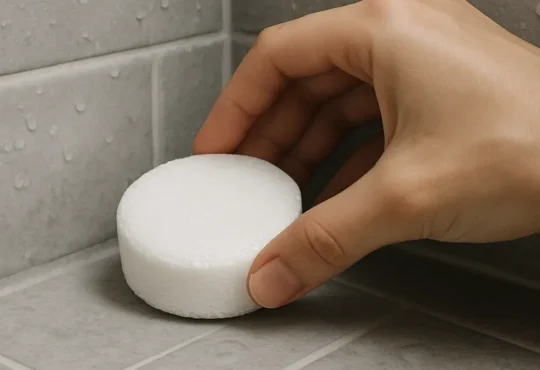
This one surprised me with how easy the transition was. Dish soap bars solid, compact, packaged in paper or cardboard clean just as effectively as the bottled kind. You rub the sponge or brush directly on the bar, work up a lather, and you’re done. There’s no pump toclog, no bottle to recycle, no watered-down dregs at the bottom that never quite dispense properly.
A single dish soap bar typically lasts longer than a standard bottle, too. The concentrated formula means you’re not paying for water, which, when you think about it, is most of what’s in liquid soap.
Disposable Sponges
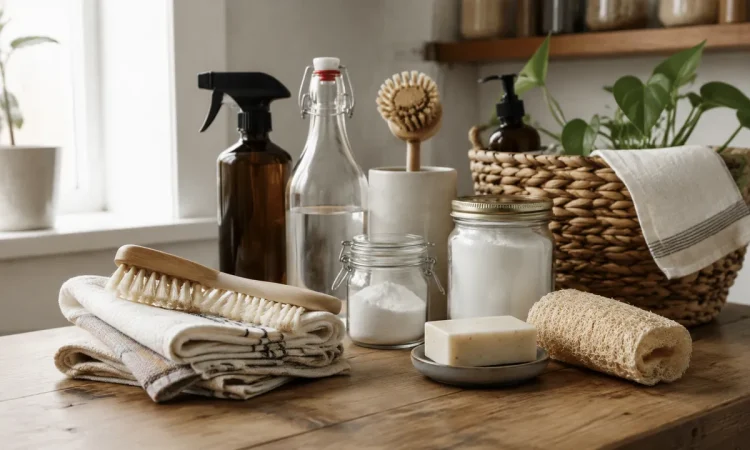
The humble kitchen sponge is a surprisingly filthy object. It harbors bacteria, it falls apart after a few weeks, and it ends up in a landfill wrapped in a little plastic net. I replaced mine with a wooden dish brush and a few loofah scrubbers grown from actual luffa plants (which are gourds something I did not know until I looked it up and felt genuinely delighted).
The wooden brush handles grease and stuck-on food just as well as any sponge, dries faster between uses, and lasts considerably longer. When it’s finally done, the wooden handle can be composted and the bristles, depending on the type, often can be too.
Dryer Sheets
Dryer sheets are one of those products that exist in a space between “genuinely useful” and “completely made up need.” They were invented, in large part, by companies that had a financial interest in you buying them. The static problem they solve was partly created by synthetic fabrics. The fresh scent is manufactured. The softness is real but achievable by other means.
Wool dryer balls a set of three or four do most of what dryer sheets claim to do. They reduce static, they cut drying time by separating clothes and allowing air to circulate more freely, and they last for years. A few drops of essential oil on the balls gives you that fresh-laundry smell if you want it. I was skeptical. They work.
Individually Packaged Cleaning Wipes
Cleaning wipes are convenient in the way that convenience often comes with a cost attached. Each wipe is a single use, each canister is plastic, and the wipes themselves are usually not biodegradable despite what some labels suggest. I used to keep them under every sink in the house.
The replacement has two components: a spray bottle filled with diluted white vinegar or a castile soap solution, and those cloth rags mentioned earlier. For surfaces that need actual disinfecting which, to be clear, is fewer surfaces than the cleaning industry would like you to believe a small bottle of concentrated disinfectant that I dilute myself handles it. One bottle lasts months. The amount of under-sink space I reclaimed was genuinely shocking.
Single-Use Razors
Safety razors are one of those switches that feel intimidating right up until the moment you actually use one, and then you wonder why you waited. The razor itself is a single piece of metal heavy, solid, built to last decades. The blades are thin, recyclable steel and cost almost nothing per unit. Over the course of a year, the savings compared to cartridge razors or disposable plastic ones become substantial.
The shave is closer, too. This is the thing people who make the switch keep saying, and it sounds like the kind of thing you’d say to justify an expensive purchase, but it’s just true. A sharp single blade cuts more cleanly than a five-blade cartridge that’s had three weeks of use.
What Actually Changed
The honest answer to what going zero-waste did for me isn’t that it saved the planet. One household opting out of paper towels doesn’t shift global plastic production. The more truthful thing is that it changed how I shop more slowly, more deliberately, with more attention to what I’m actually bringing into my life and why.
Most of the items on this list weren’t replaced with something dramatically better or worse. They were replaced with something that did the same job with less waste, less recurring cost, and less thoughtlessness. That last part, unexpectedly, turned out to be the part that mattered most.